Your cart is currently empty!
Category: Technical Insights
-
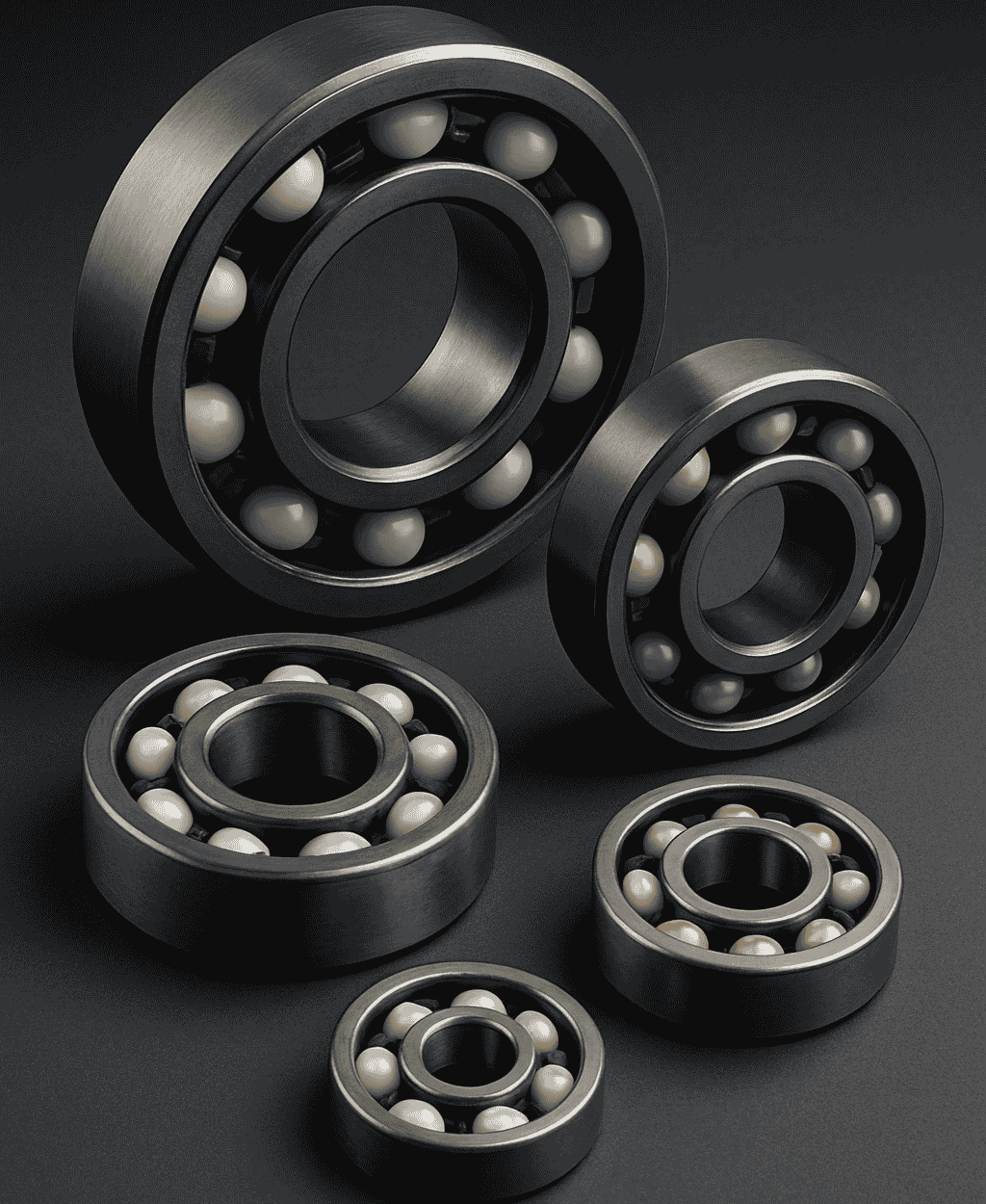
Hybrid Ceramic Technology: The Next Generation of High-Performance Ball Bearings
The evolution of ball bearing technology represents a remarkable journey from basic mechanical components to sophisticated engineering solutions. Among the most significant advances in recent decades is the emergence of hybrid ceramic ball bearings, which combines the proven reliability of steel races with the exceptional properties of ceramic rolling elements. This revolutionary technology has transformed performance standards across industries, offering unprecedented levels of durability, speed capability, and operational efficiency.
Hybrid ceramic technology integrates silicon nitride ceramic balls with steel inner and outer races, creating bearings that deliver superior performance compared to traditional all-steel alternatives. These advanced bearings operate at speeds up to 50% higher than conventional steel bearings while generating significantly less friction and heat. The ceramic balls are 60% lighter than steel counterparts, reducing centrifugal forces and enabling higher rotational speeds without compromising reliability.
The industrial significance of this technology extends beyond simple performance improvements. Hybrid ceramic bearings offer three to five times longer operational life compared to steel bearings, dramatically reducing maintenance requirements and operational downtime. Their exceptional resistance to corrosion, electrical insulation properties, and ability to perform under extreme temperature conditions make them invaluable in demanding applications across aerospace, automotive, industrial machinery, and high-speed manufacturing sectors.
Understanding Hybrid Ceramic Ball Bearing Technology
Material Composition and Structure
Hybrid ceramic ball bearings represent an innovative engineering approach that combines the best characteristics of both ceramic and steel materials. The fundamental design features ceramic rolling elements, typically manufactured from silicon nitride (Si3N4) or zirconia (ZrO2), enclosed within traditional steel races. This hybrid configuration maximizes the advantages of both materials while minimizing their individual limitations.
Silicon nitride ceramic balls offer exceptional mechanical properties including lower thermal expansion, high rigidity, and superior wear resistance compared to steel. The density of silicon nitride is approximately 60% lower than steel, which dramatically reduces centrifugal forces during high-speed rotation. This weight reduction enables bearings to achieve operational speeds that would cause excessive stress and premature failure in conventional steel bearings.
The ceramic balls undergo precision manufacturing to achieve extremely high dimensional accuracy, with super high precision equivalent to G1 grade available, exceeding ISO Grade 3 specifications. This level of precision ensures optimal load distribution and minimizes vibration during operation, contributing to the smooth performance characteristics that distinguish hybrid ceramic bearings.
Manufacturing Process and Quality Control
The production of hybrid ceramic bearings involves sophisticated manufacturing techniques that ensure consistent quality and performance. Ceramic balls are produced through gas pressure sintering processes that create pore-free microstructures, providing high strength, fracture toughness, and contact fatigue resistance. The steel races undergo precision machining and heat treatment to achieve optimal hardness and surface finish characteristics.
Modern manufacturing employs advanced technologies including artificial intelligence and automated quality control systems to enhance precision and reduce manufacturing variability. These AI-powered systems enable real-time monitoring of production parameters, predictive quality analysis, and optimization of manufacturing processes, resulting in bearings that consistently meet demanding performance specifications.
Quality assurance protocols include comprehensive dimensional inspection, surface finish verification, and performance testing under simulated operating conditions. Each bearing undergoes rigorous testing to verify rotational accuracy, friction torque levels, and noise characteristics before approval for distribution.
Performance Advantages Over Conventional Bearings
Hybrid ceramic bearings deliver measurable performance improvements across multiple operational parameters. Speed capability represents one of the most significant advantages, with these bearings operating at rotational speeds up to 1.5 million DN (diameter × RPM) compared to approximately 1.0 million DN for steel bearings. This enhanced speed capability stems from reduced centrifugal forces and improved thermal stability.
Friction reduction constitutes another critical advantage, with ceramic balls generating up to 40% less friction than steel alternatives. This reduction translates directly into energy savings, reduced heat generation, and extended bearing life. Lower friction also enables operation with minimal lubrication, making hybrid ceramic bearings suitable for applications where traditional lubrication methods are impractical.
The wear resistance of ceramic materials provides exceptional durability advantages. Ceramic balls are typically three to five times harder than steel balls, enabling them to withstand greater contact stresses without deformation. This hardness advantage, combined with the tribochemically inert properties of ceramic materials, significantly reduces adhesive wear that commonly occurs in steel-on-steel contact scenarios.
Applications Across High-Performance Industries
Aerospace and Defense Applications
The aerospace industry represents one of the most demanding environments for bearing technology, where performance, reliability, and weight reduction are critical factors. Hybrid ceramic bearings have become integral components in jet engines, aircraft control systems, and precision instruments due to their exceptional high-temperature performance and resistance to extreme operating conditions.
In jet engine applications, these bearings operate under intense heat and pressure conditions that would rapidly degrade conventional steel bearings. The thermal stability of silicon nitride ceramic balls enables operation at temperatures exceeding 1,200°C while maintaining structural integrity. This capability allows aircraft engines to operate more efficiently and with extended maintenance intervals.
Defense applications benefit from the non-magnetic and electrically insulating properties of ceramic materials. Hybrid ceramic bearings do not interfere with magnetic navigation systems or electronic equipment, making them essential for precision military applications including missile guidance systems and radar equipment.
Automotive and Electric Vehicle Integration
The automotive sector has increasingly adopted hybrid ceramic bearing technology, particularly in high-performance and electric vehicle applications. Electric motors operate at significantly higher rotational speeds than internal combustion engines, requiring bearings capable of sustained high-speed operation without excessive heat generation.
In electric vehicle applications, the reduced friction characteristics of ceramic bearings contribute directly to increased driving range by improving overall system efficiency.
Performance automotive applications utilize hybrid ceramic bearings in gearbox assemblies and engine components where reduced weight and friction deliver measurable improvements in acceleration and fuel efficiency. Racing applications particularly benefit from the rapid acceleration capabilities enabled by lighter, more efficient bearing systems.
Industrial Machinery and Manufacturing
Manufacturing environments present diverse challenges including contamination exposure, variable operating conditions, and the need for extended operational periods without maintenance. Hybrid ceramic bearings address these requirements through superior contamination resistance and extended service life characteristics.
High-speed machining applications, including CNC equipment and precision manufacturing tools, utilize hybrid ceramic bearings to achieve the rotational speeds and accuracy required for modern manufacturing processes. The low-friction characteristics prevent heat buildup that could affect machining precision, while the extended service life reduces production interruptions for bearing replacement.
Industrial pump and compressor applications benefit from corrosion resistance and ability to operate under harsh environmental conditions. Ceramic balls resist chemical attack and maintain performance characteristics in contaminated environments where steel bearings would experience rapid degradation.
Medical Equipment and Precision Instruments
Medical device manufacturing requires bearings that operate quietly, smoothly, and reliably in sterile environments. Hybrid ceramic bearings meet these requirements while offering extended service life that reduces maintenance requirements in critical medical equipment.
High-speed centrifuges, imaging equipment, and surgical instruments utilize ceramic bearing technology to achieve the precision and reliability demanded in medical applications. The non-contaminating properties of ceramic materials ensure compatibility with sterile operating requirements.
Dental handpieces and other high-speed medical tools benefit from the reduced vibration and noise characteristics of hybrid ceramic bearings, improving both practitioner comfort and patient experience during medical procedures.
Technical Performance Characteristics
Speed and Temperature Capabilities
Hybrid ceramic bearings demonstrate exceptional speed performance capabilities that significantly exceed those of conventional steel bearings. The reduced density of ceramic balls minimizes centrifugal loading effects, enabling operation at speeds up to 50% higher than steel ball bearings. This speed advantage results from the fundamental physics of rotating masses, where lighter ceramic balls generate proportionally less centrifugal force at high rotational speeds.
Temperature performance represents another critical advantage of ceramic bearing technology. Silicon nitride ceramic balls maintain their strength and hardness up to 1,800°F (approximately 980°C), far exceeding the temperature limitations of steel bearings. This thermal stability enables operation in high-temperature applications including turbomachinery, furnace equipment, and aerospace applications where conventional bearings would experience rapid degradation.
The combination of high-speed and high-temperature capabilities makes hybrid ceramic bearings particularly valuable in gas turbine applications, where both operational parameters reach extreme levels simultaneously. The ability to maintain stable performance under these conditions translates directly into improved equipment reliability and extended maintenance intervals.
Load Capacity and Distribution
Despite the lighter weight of ceramic balls, hybrid ceramic bearings maintain excellent load-carrying capabilities through optimized design and material properties. The higher modulus of elasticity of ceramic materials provides improved bearing rigidity, enabling more uniform load distribution across all rolling elements. This enhanced load distribution reduces localized stress concentrations that can lead to premature bearing failure.
The combination of ceramic balls with steel races creates an optimal balance between load capacity and performance characteristics. While full ceramic bearings may have limitations in heavy-load applications due to material brittleness, hybrid designs leverage the strength of steel races to handle substantial loads while benefiting from the performance advantages of ceramic rolling elements.
Dynamic load ratings for hybrid ceramic bearings often match or exceed those of comparable steel bearings, while offering significantly improved performance under combined loading conditions. The ability to handle both radial and axial loads effectively makes these bearings suitable for complex loading scenarios common in industrial applications.
Lubrication Requirements and Compatibility
One of the significant advantages of hybrid ceramic bearings is their reduced lubrication requirements compared to steel bearings. The smooth surface finish and low adhesive wear characteristics of ceramic balls enable operation with minimal lubrication, extending relubrication intervals and reducing maintenance requirements.
The tribochemically inert properties of ceramic materials result in improved lubricant life, as ceramic balls do not promote lubricant degradation through catalytic reactions that commonly occur with steel components. This characteristic enables the use of synthetic lubricants for extended periods without performance degradation.
In some applications, hybrid ceramic bearings can operate under boundary lubrication conditions or even dry running scenarios where steel bearings would fail rapidly. This capability makes them suitable for applications where conventional lubrication methods are impractical or impossible.
Electrical Insulation Properties
The electrical insulation characteristics of ceramic materials provide significant advantages in applications involving electrical equipment or where stray electrical currents may be present. Silicon nitride ceramic balls offer excellent electrical insulation, preventing electrical discharge damage that commonly affects steel bearings in motor applications.
This insulation capability is particularly valuable in electric motor applications controlled by variable frequency drives, where electrical arcing can cause pitting and premature bearing failure. Hybrid ceramic bearings eliminate this failure mechanism, extending bearing life and improving system reliability.
The non-conductive properties also make hybrid ceramic bearings suitable for applications in electromagnetic environments where maintaining electrical isolation is critical for system performance.
Comparative Analysis: Ceramic vs. Steel Performance
Friction and Energy Efficiency
Hybrid ceramic bearings demonstrate substantial friction reduction compared to traditional steel bearings, with ceramic balls generating up to 75% less friction under equivalent operating conditions. This dramatic reduction stems from the superior surface finish achievable with ceramic materials and their inherently low coefficient of friction. The smooth, non-porous surface of ceramic balls creates minimal contact area with steel races, significantly reducing rolling resistance.
Energy efficiency improvements translate directly into operational cost savings across various applications. In electric motor applications, reduced bearing friction can improve overall system efficiency by 2-5%, which represents substantial energy savings over extended operating periods. Industrial studies indicate that hybrid ceramic bearings operating at high speeds generate approximately 10-15% less heat than comparable steel bearings, enabling higher operational speeds without thermal limitations.
The tribological advantages extend beyond simple friction reduction. Ceramic balls exhibit minimal adhesive wear characteristics, eliminating the microscopic cold welding that occurs between steel surfaces even under normal lubrication conditions. This absence of adhesive wear mechanisms contributes to the extended service life and consistent performance characteristics of hybrid ceramic bearings.
Durability and Service Life
Service life comparisons demonstrate the exceptional durability advantages of hybrid ceramic bearing technology. Under identical operating conditions, hybrid ceramic bearings typically provide three to five times longer operational life than steel bearings. In harsh environmental conditions involving contamination or poor lubrication, this advantage can extend to ten times longer service life.
The superior hardness of ceramic balls, approximately three to five times greater than steel, enables them to resist deformation under high contact stresses. This hardness advantage prevents the microscopic surface damage that accumulates over time in steel bearings, contributing to the extended fatigue life of ceramic bearing systems.
Wear resistance testing demonstrates that ceramic balls maintain their original surface finish and dimensional accuracy significantly longer than steel balls. The combination of hardness and chemical inertness provides resistance to both mechanical and chemical degradation mechanisms that limit the life of conventional bearings.
Environmental Performance Factors
Hybrid ceramic bearings excel in challenging environmental conditions where conventional bearings experience rapid degradation. Ceramic materials demonstrate exceptional corrosion resistance, withstanding exposure to acids, alkalis, and aggressive chemicals that would rapidly attack steel bearings. This corrosion resistance enables operation in marine environments, chemical processing facilities, and other corrosive applications.
Temperature stability represents another significant environmental advantage. While steel bearings experience reduced hardness and altered metallurgy at elevated temperatures, ceramic balls maintain their mechanical properties across wide temperature ranges. This stability enables reliable operation in applications involving temperature cycling or sustained high-temperature exposure.
Contamination tolerance of ceramic bearings exceeds that of steel bearings due to the hardness and chemical inertness of ceramic materials. Abrasive particles that would embed in steel surfaces and cause progressive wear have minimal effect on ceramic balls, enabling continued operation in dusty or contaminated environments.
Cost-Benefit Analysis
While hybrid ceramic bearings typically require higher initial investment compared to steel bearings, total cost of ownership analysis frequently demonstrates favorable economics. The extended service life reduces replacement frequency, minimizing both component costs and labor expenses associated with bearing changes.
Reduced maintenance requirements contribute significantly to operational cost savings. Extended lubrication intervals, reduced inspection frequency, and elimination of premature failures combine to reduce maintenance costs by 30-50% in typical industrial applications. These savings often offset the higher initial bearing cost within 12-18 months of operation.
Energy savings from reduced friction provide ongoing operational benefits throughout the bearing service life. In high-speed or continuous operation applications, annual energy cost reductions can represent 5-10% of the initial bearing cost, creating substantial long-term value.
Manufacturing Innovations and Quality Standards
Advanced Materials and Processing Techniques
The production of hybrid ceramic ball bearings involves sophisticated materials science and precision manufacturing processes that ensure consistent quality and performance. Silicon nitride ceramic balls undergo gas pressure sintering at temperatures exceeding 1,700°C under carefully controlled atmospheric conditions to achieve optimal density and microstructure. This process eliminates porosity and creates the fine-grain structure necessary for high strength and fracture toughness.
Advanced ceramic processing techniques include hot isostatic pressing (HIP) which applies simultaneous high temperature and pressure to achieve near-theoretical density and eliminate internal defects. These processing methods create ceramic balls with superior mechanical properties including high strength, excellent wear resistance, and consistent dimensional stability across temperature variations.
Quality control throughout the manufacturing process employs precision measurement systems including coordinate measuring machines and laser interferometry to verify dimensional accuracy within micrometers. Surface finish specifications require specialized polishing techniques to achieve the mirror-like surface quality necessary for optimal bearing performance.
Artificial Intelligence in Manufacturing
Modern hybrid ceramic bearing manufacturing increasingly incorporates artificial intelligence technologies to enhance precision, reduce variability, and optimize production efficiency. AI-powered systems monitor manufacturing parameters in real-time, detecting deviations that could affect bearing quality before defective products are produced.
Machine learning algorithms analyze production data to identify optimal processing parameters for different specifications and operating conditions. These systems continuously improve manufacturing consistency by learning from production outcomes and adjusting parameters to minimize variation.
Predictive quality control systems utilize AI to identify potential quality issues based on sensor data from manufacturing equipment. This proactive approach prevents production of defective bearings and reduces waste while maintaining consistent quality standards.
Industry Standards and Certifications
Hybrid ceramic bearings must meet stringent industry standards that ensure consistent performance and reliability across different manufacturers. International standards including ABMA (American Bearing Manufacturers Association) and ISO specifications define dimensional tolerances, surface finish requirements, and performance characteristics.
Grade classifications for ceramic balls follow established standards with Grade 3 representing high precision suitable for most industrial applications, while Grade 1 provides ultra-precision for demanding applications requiring exceptional accuracy. These standardized grades ensure interchangeability and predictable performance characteristics across different suppliers.
Certification processes include comprehensive testing protocols that verify performance characteristics under standardized conditions. Testing includes dimensional verification, surface finish measurement, hardness testing, and operational performance evaluation under simulated service conditions.
Quality Assurance and Testing Protocols
Comprehensive quality assurance programs for hybrid ceramic bearings incorporate multiple inspection stages throughout the manufacturing process. Incoming material inspection verifies ceramic ball specifications including dimensional accuracy, surface finish, and material composition through chemical analysis and mechanical testing.
Assembly quality control includes precision measurement of bearing clearances, raceway roundness, and overall dimensional accuracy. Operational testing under controlled conditions verifies friction torque, noise levels, and vibration characteristics to ensure bearings meet performance specifications.
Final inspection protocols include comprehensive performance testing under simulated operating conditions. This testing verifies speed capability, load capacity, and temperature performance to ensure each bearing meets specification requirements before shipment.
Future Developments and Market Trends
Emerging Technologies and Applications
The hybrid ceramic bearing industry continues to evolve with emerging technologies that expand application possibilities and improve performance characteristics. Additive manufacturing techniques, including 3D printing, are being developed for ceramic component production, potentially enabling more complex geometries and customized bearing designs.
Smart bearing technology represents a significant development trend, incorporating sensors and monitoring systems directly into bearing assemblies. These intelligent bearings provide real-time data on temperature, vibration, and loading conditions, enabling predictive maintenance strategies that optimize equipment uptime.
Advanced coating technologies are being developed to further enhance bearing performance. Diamond-like carbon (DLC) coatings and specialized ceramic coatings provide additional wear resistance and reduced friction, extending the performance advantages of hybrid ceramic bearings.
Market Growth and Industry Adoption
The global hybrid ceramic bearing market demonstrates strong growth trends, with projections indicating expansion from $360 million in 2025 to $510 million by 2034, representing a compound annual growth rate of 3.84%. This growth is driven by increasing adoption in electric vehicle applications, renewable energy systems, and high-performance industrial machinery.
Electric vehicle market expansion represents a primary growth driver, with hybrid ceramic bearings providing essential performance advantages for high-speed electric motors. The automotive sector accounts for approximately 58% of demand growth for lightweight, durable bearing solutions.
Aerospace applications continue to drive demand for high-performance bearings capable of operating under extreme conditions. Aerospace-grade hybrid bearings represent approximately 36% of new product development efforts, focusing on enhanced temperature resistance and vibration tolerance.
Sustainability and Environmental Impact
Hybrid ceramic bearings contribute to sustainability objectives through multiple mechanisms including energy efficiency improvements, extended service life, and reduced maintenance requirements. The enhanced energy efficiency of ceramic bearings reduces power consumption in motor applications, contributing to overall energy conservation efforts.
Extended service life reduces bearing replacement frequency, minimizing material consumption and waste generation. The durability of ceramic materials enables bearings to operate effectively for extended periods, reducing the environmental impact associated with frequent component replacement.
Reduced lubrication requirements of hybrid ceramic bearings minimize lubricant consumption and disposal, contributing to environmental protection objectives. The ability to operate with minimal lubrication or synthetic lubricants reduces the environmental impact of bearing maintenance activities.
Lubrication Strategies and Intervals
Hybrid ceramic bearings benefit from optimized lubrication strategies that take advantage of their reduced lubrication requirements compared to steel bearings. The smooth surface finish and chemical inertness of ceramic balls enable extended lubrication intervals, often 2-3 times longer than steel bearings under equivalent conditions.
Lubricant selection should consider the enhanced temperature stability and reduced friction characteristics of ceramic bearings. Synthetic lubricants often provide optimal performance due to their thermal stability and compatibility with extended service intervals.
Relubrication procedures can be less frequent due to the improved lubricant life achieved with ceramic balls. However, monitoring systems should verify lubricant condition and bearing temperature to ensure optimal lubrication is maintained throughout the service interval.
Monitoring and Diagnostic Techniques
Condition monitoring of hybrid ceramic bearings benefits from their consistent performance characteristics and predictable degradation patterns. Vibration analysis provides excellent diagnostic capability, with ceramic bearings typically exhibiting lower baseline vibration levels than steel bearings.
Temperature monitoring is particularly effective for ceramic bearings due to their low heat generation characteristics. Elevated temperatures often indicate lubrication issues or contamination before other symptoms become apparent.
Acoustic monitoring can detect early signs of bearing distress, with ceramic bearings typically operating more quietly than steel bearings. Changes in acoustic signature can indicate developing problems that require attention.
Troubleshooting Common Issues
While hybrid ceramic bearings demonstrate exceptional reliability, understanding potential failure modes enables proactive maintenance and problem resolution. Contamination represents the most common cause of premature failure, particularly in applications where sealing is inadequate.
Improper installation procedures can create stress concentrations that affect bearing life. Misalignment, excessive preload, or contamination during installation can significantly impact performance. Proper installation training and procedures are essential for achieving design life.
Lubrication-related issues, while less common than with steel bearings, can still occur if lubrication intervals are extended beyond recommended limits or if incompatible lubricants are used. Regular lubricant analysis can identify potential issues before bearing damage occurs.
Q: What are the main advantages of hybrid ceramic ball bearings over traditional steel bearings?
A: Hybrid ceramic ball bearings offer several significant advantages including 50% higher speed capability, up to 75% friction reduction, and three to five times longer service life compared to steel bearings. The ceramic balls are 60% lighter than steel, reducing centrifugal forces and enabling higher rotational speeds without excessive heat generation. Additionally, they provide excellent corrosion resistance, electrical insulation properties, and can operate at temperatures up to 1,800°F while maintaining structural integrity.
Q: How do hybrid ceramic bearings perform in high-temperature applications?
A: Silicon nitride ceramic balls maintain their strength and hardness at temperatures exceeding 1,200°C, far surpassing the temperature limitations of steel bearings. This exceptional thermal stability enables reliable operation in gas turbines, furnace equipment, and aerospace applications where conventional bearings would experience rapid degradation.
Q: What industries benefit most from hybrid ceramic bearing technology?
A: Primary beneficiaries include aerospace and defense applications requiring high-temperature performance and reliability, electric vehicle manufacturing where high-speed motor operation demands reduced friction and weight, and industrial machinery applications involving contaminated environments or extended operational periods. Medical equipment manufacturing also utilizes hybrid ceramic bearings for their quiet operation and extended service life in sterile environments.
Q: Are hybrid ceramic bearings more expensive than steel bearings, and is the cost justified?
A: While hybrid ceramic bearings typically require 2-3 times higher initial investment, total cost of ownership analysis frequently demonstrates favorable economics. The extended service life reduces replacement frequency by 3-5 times, while reduced maintenance requirements can lower operational costs by 30-50%. Energy savings from reduced friction often represent 5-10% of initial bearing cost annually, creating substantial long-term value.
Q: What are the lubrication requirements for hybrid ceramic bearings?
A: Hybrid ceramic bearings require significantly less lubrication than steel bearings due to their smooth surface finish and low adhesive wear characteristics. Relubrication intervals can typically be extended 2-3 times longer than steel bearings, and these bearings can operate under boundary lubrication conditions where steel bearings would fail. The tribochemically inert properties of ceramic materials also extend lubricant life by preventing catalytic degradation.
Q: How do you properly install and maintain hybrid ceramic bearings?
A: Installation requires special attention to cleanliness and proper mounting techniques, avoiding excessive force that could damage ceramic components. Thermal mounting using induction heaters provides optimal installation for interference fits, while press-fit installations require specialized tools for even force distribution. Maintenance benefits from extended intervals due to improved durability, though condition monitoring through vibration and temperature analysis remains important for optimal performance.
Q: What are the speed limitations of hybrid ceramic bearings compared to steel bearings?
A: Hybrid ceramic bearings can operate at speeds up to 1.5 million DN (diameter × RPM) compared to approximately 1.0 million DN for steel bearings, representing up to 50% higher speed capability. This advantage results from the 60% weight reduction of ceramic balls, which generates proportionally less centrifugal force at high rotational speeds, enabling sustained high-speed operation without excessive stress or heat generation. -
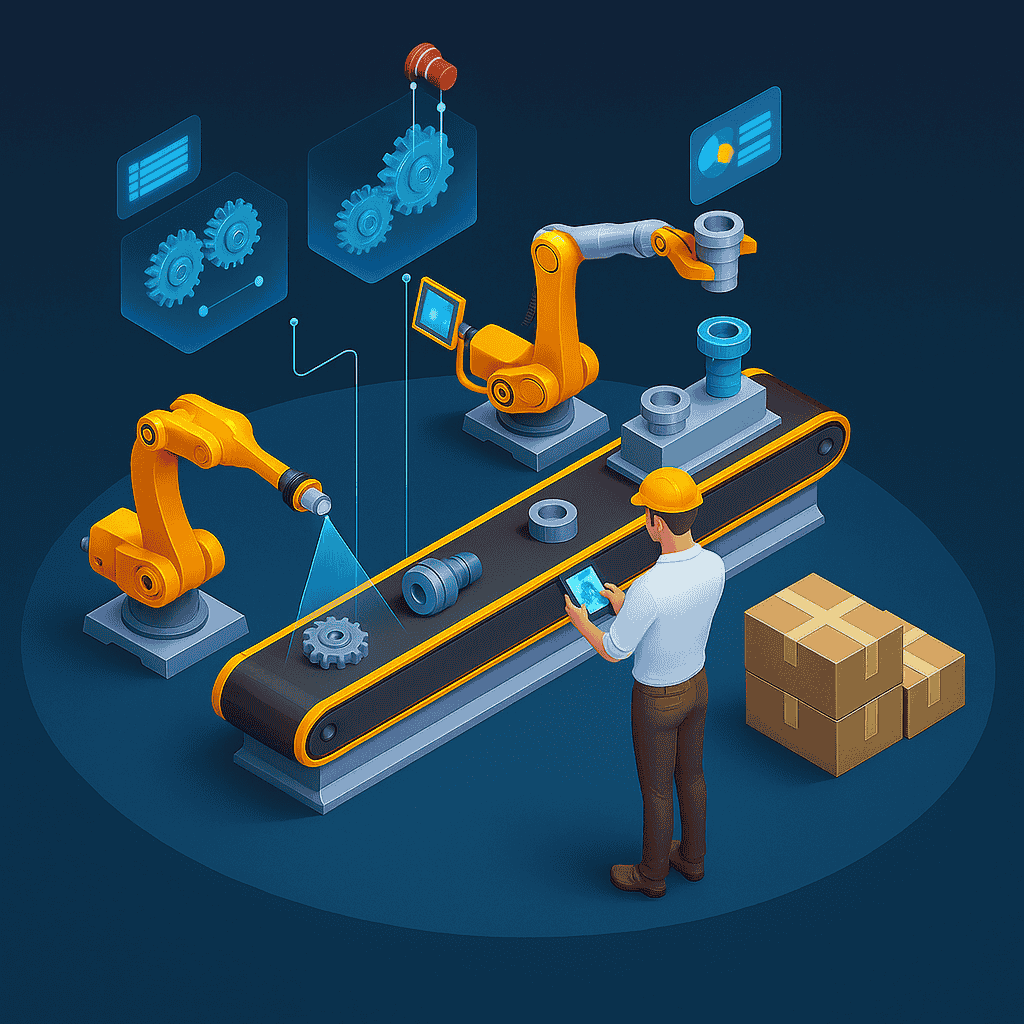
Precision Manufacturing Breakthrough: How Advanced Materials are Extending the Life of Roller Ball Bearing by 300%
The industrial machinery landscape is experiencing a revolutionary transformation as advanced materials technology redefines bearing performance standards across manufacturing sectors. Recent breakthroughs in precision manufacturing have achieved remarkable results, with specialized roller ball bearing configurations extending operational life by an unprecedented 300% compared to traditional steel alternatives. These innovations represent a pivotal moment for maintenance managers, plant engineers, and procurement officers seeking enhanced equipment reliability and reduced operational costs in demanding industrial environments.
Advanced bearing materials offer compelling advantages for oil and gas facilities, heavy manufacturing plants, and construction equipment operations, especially in regions like Saudi Arabia. The integration of cutting-edge materials science with precision engineering techniques is creating new possibilities for equipment longevity and performance optimization.
Understanding Advanced Materials in Modern Bearing Technology
Modern precision bearings leverage sophisticated material compositions that surpass traditional steel in multiple performance categories. Silicon nitride has emerged as a game-changing material, offering exceptional hardness ratings up to 1500 HV compared to approximately 750 HV for standard steel bearings. This remarkable hardness translates directly to superior wear resistance and extended operational life under demanding conditions.
Ceramic bearings utilizing silicon nitride (Si3N4) demonstrate extraordinary temperature resistance, maintaining structural integrity at temperatures up to 1000 °C without deformation or loss of mechanical strength. This capability proves invaluable in high-temperature manufacturing processes where conventional roller ball bearing assemblies would fail prematurely.
The bearing technology revolution extends beyond individual material properties to encompass hybrid configurations that combine ceramic rolling elements with steel rings. These hybrid ball bearings offer reduced friction characteristics while remaining cost-effective for widespread industrial applications. The strategic placement of ceramic components in high-stress areas maximizes performance benefits while controlling manufacturing costs.
Advanced bearing lubrication systems complement these material improvements, with specialized nano-lubricants and synthetic formulations designed specifically for enhanced material compatibility. These lubrication innovations extend the performance advantages of advanced materials by reducing friction coefficients and improving thermal management.
What’s Behind 300% Life Extension?
The remarkable 300% life extension achieved through advanced materials stems from fundamental improvements in material properties and engineering design. Bearing life calculations traditionally rely on the L10 formula, where bearing longevity correlates with load capacity and applied forces. Advanced materials dramatically improve this relationship by increasing dynamic load ratings and reducing internal stresses.
Ceramic ball bearings demonstrate superior fatigue resistance due to their unique microstructure and material composition. Unlike steel bearings that develop micro-cracks under cyclic loading, silicon nitride ceramics maintain structural integrity through significantly higher stress cycles. This fundamental difference in fatigue behavior directly contributes to extended operational life.
The density advantage of advanced materials plays a crucial role in high-speed applications. Silicon nitride weighs only 40% of equivalent steel components, reducing centrifugal forces and dynamic loading at elevated rotational speeds. This weight reduction enables higher operational speeds while maintaining bearing stability and reducing wear rates.
Industrial bearings utilizing advanced sealing technologies further enhance life extension by preventing contamination and maintaining optimal lubrication conditions. Enhanced sealing solutions, including labyrinth seals and non-contact configurations, protect internal components from harsh environmental conditions common in manufacturing facilities.
Temperature management represents another critical factor in life extension. Advanced materials maintain dimensional stability across wider temperature ranges, preventing thermal expansion issues that compromise bearing clearances and performance. This thermal stability ensures consistent operation in demanding manufacturing environments.
Manufacturing Process Innovations
Precision manufacturing techniques have evolved to support advanced material integration in roller ball bearing production. Controlled Environment Vacuum Melting (CEVM) processes ensure ultra-clean material compositions with minimal impurity levels. These advanced manufacturing methods produce bearings with superior material consistency and predictable performance characteristics.
Bearing manufacturing now incorporates specialized heat-treatment processes designed specifically for advanced materials. These treatments optimize material microstructure to achieve desired hardness levels while maintaining toughness and fatigue resistance. The result is bearings that perform reliably under extreme loading conditions.
Modern quality control systems utilize advanced inspection techniques to verify material properties and dimensional accuracy. These quality-assurance measures ensure that each bearing meets stringent performance standards required for extended operational life.
Additive manufacturing technologies are emerging as powerful tools for creating complex bearing geometries previously impossible with traditional machining methods. These manufacturing capabilities enable optimized internal geometries that reduce stress concentrations and improve load distribution.
Surface treatment technologies enhance bearing performance through specialized coatings and surface modifications. Diamond-like carbon (DLC) coatings and other advanced surface treatments reduce friction coefficients and improve wear resistance beyond base material capabilities.
Real-World Applications and Performance Results
Industrial facilities implementing advanced material bearings report significant operational improvements across multiple performance metrics. Manufacturing plants in Saudi Arabia’s heavy industry sector document extended maintenance intervals and reduced unplanned downtime when utilizing ceramic bearings in critical applications.
Automotive bearings incorporating advanced materials demonstrate improved fuel efficiency through reduced friction losses. This efficiency improvement becomes particularly valuable in electric vehicle applications where energy conservation directly impacts operational range and performance.
Oil and gas facilities benefit from the corrosion resistance properties of advanced bearing materials. Silicon nitride bearings maintain performance in harsh chemical environments where traditional steel components would degrade rapidly, ensuring consistent operation in demanding process applications.
High-speed manufacturing equipment achieves higher operational speeds with advanced material ball bearings due to reduced centrifugal loading and improved dynamic stability. These speed capabilities enable increased production throughput while maintaining precision and reliability.
Wind turbine applications showcase the longevity benefits of advanced bearing technology, with ceramic components providing extended service life in demanding environmental conditions. The combination of high loads, variable speeds, and harsh weather exposure makes wind turbines ideal applications for demonstrating advanced material advantages.
Cost-Benefit Analysis of Advanced Bearing Technology
The initial investment in advanced material bearings typically ranges from 20–40% higher than conventional alternatives. However, comprehensive total-cost-of-ownership analysis demonstrates significant long-term savings through reduced maintenance costs, extended service intervals, and improved equipment reliability.
Bearing life extension directly translates to reduced replacement frequency and associated maintenance labor costs. Manufacturing facilities report maintenance cost reductions of 30–50% when implementing advanced bearing technology in critical applications. These savings compound over equipment operational life, often justifying the initial investment within 18–24 months.
Energy-efficiency improvements contribute additional operational savings through reduced power consumption. Advanced bearing lubrication systems and low-friction materials decrease energy losses, resulting in measurable utility cost reductions for high-duty-cycle equipment.
Unplanned downtime reduction represents the most significant cost benefit for many industrial operations. The enhanced reliability of advanced material roller ball bearing assemblies prevents unexpected equipment failures that can cost thousands of dollars per hour in lost production.
Predictive maintenance capabilities improve with advanced bearing technology due to more predictable wear patterns and failure modes. This predictability enables better maintenance planning and inventory management, further reducing operational costs.
Implementation Strategies for Industrial Facilities
Successful implementation of advanced bearing technology requires strategic planning and phased deployment approaches. Maintenance managers should begin with critical equipment applications where downtime costs are highest and operational demands are most severe.
Bearing selection criteria must account for specific operational conditions including load types, speed ranges, temperature exposure, and environmental contamination levels. Proper application engineering ensures optimal performance and validates expected life-extension benefits.
Staff training programs are essential for successful implementation of advanced bearing technology. Maintenance personnel require updated knowledge regarding handling procedures, installation techniques, and monitoring practices specific to advanced materials.
Lubrication compatibility verification ensures optimal performance from advanced material bearings. Specialized lubricants designed for ceramic and hybrid bearing applications may be required to achieve maximum performance benefits.
Condition monitoring systems should be calibrated for advanced material characteristics, as vibration signatures and temperature patterns may differ from traditional steel bearings. Updated monitoring protocols ensure early detection of potential issues and maximize equipment reliability.
Future Trends in Bearing Technology
Smart bearing technology represents the next frontier in industrial bearing applications, with integrated sensors providing real-time monitoring of temperature, vibration, and load conditions. These intelligent systems enable predictive maintenance strategies and optimized operational parameters.
3D printing technology is revolutionizing bearing manufacturing by enabling complex geometries and customized designs previously impossible with conventional machining methods. This manufacturing flexibility supports application-specific optimizations and rapid prototyping capabilities.
Sustainability considerations are driving development of environmentally friendly bearing lubricants and recyclable material compositions. These eco-friendly innovations support corporate sustainability goals while maintaining performance standards.
Nano-lubricant technology continues advancing with specialized formulations designed for specific material combinations and operating conditions. These advanced lubricants enhance the performance benefits of advanced bearing materials while extending service intervals.
Artificial intelligence integration enables automated optimization of bearing performance parameters based on real-time operational data. These intelligent systems continuously adjust operating conditions to maximize equipment life and performance.
Best Practices for Longevity
Proper maintenance procedures are critical for realizing the full life-extension potential of advanced bearing technology. Regular inspection schedules should include visual examination for wear indicators, temperature monitoring, and vibration analysis to detect potential issues early.
Lubrication management requires careful attention to lubricant type, quantity, and replacement intervals specific to advanced materials. Over-lubrication can be as detrimental as under-lubrication, making precise application essential for optimal performance.
Environmental protection measures, including effective sealing and contamination prevention, are crucial for maintaining the performance advantages of advanced bearing materials. Dust, moisture, and chemical contaminants can negate the benefits of superior base materials.
Alignment verification ensures proper load distribution and prevents premature wear in advanced material bearings. Misalignment issues that might be tolerated by steel components can cause accelerated wear in ceramic materials due to their different mechanical properties.
Storage and handling procedures require special attention for advanced material bearings to prevent damage during transportation and installation. Proper handling techniques protect delicate ceramic components from impact damage that could compromise performance.
Q: What makes advanced materials extend bearing life by 300%?
A: Advanced materials like silicon nitride offer superior hardness (up to 1500 HV vs 750 HV for steel), exceptional temperature resistance up to 1000°C, and reduced density that minimizes centrifugal loading.
Q: Are advanced material bearings cost-effective for industrial applications?
A: While initial costs are 20-40% higher than conventional bearings, the total cost of ownership is significantly lower due to extended service life, reduced maintenance frequency, and improved equipment reliability.
Q: Which industrial applications benefit most from advanced bearing technology?
A: High-temperature processes, high-speed equipment, chemically aggressive environments, and critical applications where downtime is expensive benefit most.
Q: How do ceramic bearings perform in harsh environments?
A: Ceramic bearings excel in harsh conditions due to excellent corrosion resistance, high temperature tolerance, and resistance to chemical attack.
Q: What maintenance changes are required for advanced material bearings?
A: Advanced bearings may require specialized lubricants, modified handling procedures, and updated monitoring protocols.
Q: Can advanced bearings be retrofitted into existing equipment?
A: Most advanced material bearings are designed as direct replacements for conventional bearings, making retrofitting straightforward.
Q: How do I verify the authenticity of advanced bearing materials?
A: Work with authorized distributors who provide material certifications and test reports. Advanced materials should meet specific industry standards such as ASTM F2730/F2730M for silicon nitride bearing materials. -
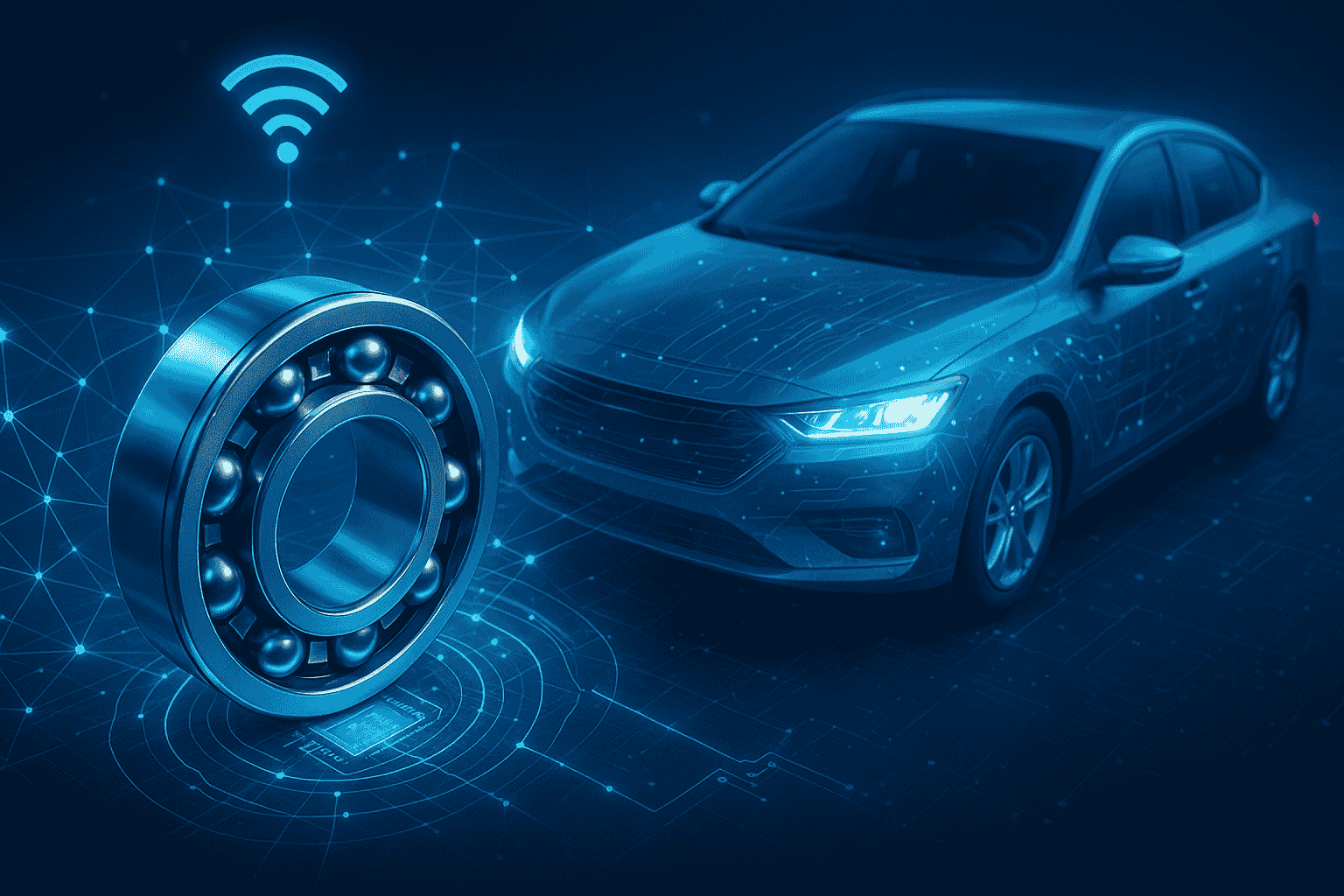
Smart Car Bearings: How IoT Integration is Revolutionizing Vehicle Maintenance in 2025
The automotive industry is witnessing an unprecedented shift, fueled by advances in car bearings and IoT integration. Modern vehicles now leverage smart bearings equipped with cutting-edge sensors, enabling real-time condition monitoring and predictive maintenance capabilities. This technological leap not only enhances safety and reliability but also significantly reduces downtime and long-term maintenance costs for car owners and fleet operators.
Car bearings—whether ball, roller, or advanced sensor-integrated units—have evolved from basic friction reducers to intelligent components. Integrated with IoT networks, these bearings now provide actionable data, support predictive diagnostics, and ensure vehicles operate at peak efficiency.
What Are Car Bearings and Why Are They Critical in Vehicles?
Car bearings are precision-engineered components that enable smooth rotation of wheels, axles, and engine parts by minimizing friction and supporting heavy loads. Their role extends across:
- Wheel hubs (Ensuring tire rotation)
- Engine (Crankshaft and camshaft movement)
- Transmission and differential systems
- Suspension and steering mechanisms
Common Car Bearing Types
- Ball Bearings: Optimal for radial loads, high speeds
- Roller Bearings: Handle heavier loads and axial forces
- Tapered Roller Bearings: Combine radial and axial load support, especially in wheel hubs
- Self-aligning Bearings: Compensate for misalignment, enhancing stability on uneven terrains
The Rise of Smart Bearings: IoT Transforms Vehicle Maintenance
How IoT-Enabled Smart Bearings Work
IoT-enabled smart car bearings are embedded with sensors to monitor key parameters:
- Temperature
- Vibration
- Load and rotation speed
- Lubrication levels
These sensors constantly collect and transmit data to cloud-based platforms, where AI algorithms parse trends, detect abnormal patterns, and predict failures before they occur. This shift from scheduled preventive maintenance to truly predictive, data-driven care reduces human error and allows for maintenance only when necessary—boosting cost-efficiency and safety.
Key IoT Features:
- Real-time condition monitoring
- Instant alerts for impending bearing faults
- Remote diagnostics and troubleshooting
- Integration with vehicle health dashboards
Major Benefits of Smart Bearings for Automotive Maintenance
Comprehensive List of Benefits:
- Reduced Downtime: Early detection of wear prevents sudden breakdowns, minimizing vehicle downtime by up to 30%.
- Cost Savings: Predictive maintenance algorithms can cut repair costs by up to 40%, extending component lifespan.
- Extended Life: Smart monitoring prevents overloads, improper lubrication, and contamination, greatly enhancing bearing durability.
- Enhanced Safety: Real-time alerts ensure timely repairs, reducing accident risks and improving overall road safety.
- Improved Fuel Efficiency: Optimized performance of bearing systems contributes to better fuel economy.
Smart Bearings in Electric and Autonomous Vehicles
The rise of electric vehicles (EVs) and autonomous cars has elevated the role of smart bearings:
- EV motors demand high-speed, low-friction bearings to handle instant torque
- Sensor data enables adaptive control systems for efficient operation and enhanced driving experience
- IoT simplifies diagnostics, crucial for autonomous fleet reliability
Bullet Points:
- Sensor bearings manage speed, direction, and temperature
- Compact, integrated design for the unique needs of EVs and self-driving vehicles
- Real-time monitoring supports the safe operation of critical propulsion systems
Predictive Maintenance—From Reactive to Proactive
Predictive maintenance uses AI and machine learning to analyze sensor data from smart bearings and related vehicle components.
Key tasks include:
- Vibration analysis for early fault detection
- Temperature monitoring to avert overheating
- Automated alerts and service recommendations
Benefits:
- Maintenance scheduled only when necessary, based on actual wear and tear
- Reduced unplanned breakdowns and emergency repairs
- Optimized inventory and spare parts management for workshops
- Enhanced trust and vehicle longevity for consumers
Choosing the Right Smart Bearings for Modern Vehicles
Selecting the appropriate smart bearing involves:
- Application: Wheel hub, engine, transmission, or suspension
- Load Capacity: Handling dynamic and static loads
- Sensor Integration: Temperature, vibration, and speed support
- Environmental Protection: Dust, debris, and moisture resistance
Conclusion: The Future is Data-Driven Vehicle Health
Smart car bearings, powered by IoT and predictive analytics, have revolutionized how maintenance is performed in 2025. Vehicles now benefit from proactive health management, extending component life, enhancing safety, and streamlining the user experience.
For car owners, fleet managers, and automotive service providers, embracing smart bearings is no longer optional—it’s the key to unlocking sustainable and efficient vehicle performance.
Call-to-Action:
Subscribe to stay updated on the latest innovations in smart car bearings, IoT automotive technology, and advanced vehicle maintenance trends!Q: What are the top symptoms of failing car bearings detected by smart sensors?
A: IoT-enabled bearings can identify early warning signs such as abnormal vibration, rising temperature, and unusual noise, ensuring timely repairs before major issues occur.
Q: How can predictive maintenance extend the life of my smart car bearings?
A: By analyzing real-time data and alerting owners before faults develop, predictive systems optimize service intervals and prevent costly breakdowns.
Q: Are smart bearings compatible with older vehicles or just new models?
A: Many aftermarket solutions allow upgrading traditional bearings to smart sensor-equipped types, especially in wheel hubs and engine components.
Q: What long-tail keywords help with diagnostics in smart automotive maintenance?
A: Examples include “real-time car bearing temperature monitoring,” “vibration analysis for automotive bearings,” and “IoT predictive maintenance for wheel hubs.”
Q: How do smart bearings improve vehicle safety over conventional bearings?
A: They provide instant alerts and automated diagnostic feedback, preventing failures, improving control, and reducing accident risks—critical for both EVs and traditional vehicles.Ready to transform your auto maintenance experience? Subscribe now for updates on IoT, smart bearings, and the future of vehicle reliability!
-
Bearings for Sustainable Manufacturing: Green Bearing Solutions Transform Industrial Carbon Footprints
As global industries face mounting pressure to curb emissions and embrace sustainability, the spotlight has turned to one of the most ubiquitous yet overlooked machine components: bearings. These precision parts underpin nearly every rotary and linear motion application—from pumps and compressors to conveyors and turbines—and innovations in bearing design and production are now driving a new era of sustainable manufacturing. By leveraging advanced materials, optimized processes, and smart maintenance strategies, manufacturers can reduce energy consumption, extend equipment life, and significantly shrink their carbon footprints without sacrificing performance or reliability. This blog will delve into how Bearing World is leading the charge in green bearing solutions for maintenance managers, plant engineers, and procurement officers across Saudi Arabia and the broader Middle East.
The Imperative for Green Bearings
Industrial manufacturing accounts for roughly 30% of global energy use and a comparable share of carbon emissions. With stringent environmental regulations on the rise in the Kingdom of Saudi Arabia and mounting corporate commitments to net-zero targets, companies must adopt greener practices at every stage of the supply chain. Bearings—despite their small size—offer outsized potential for efficiency gains:
- Up to 20% of a motor’s energy losses stem from friction in rolling and sliding bearings.
- Extending bearing service life by 50% can cut replacement-related CO₂ by thousands of tons annually in large facilities.
- Smart lubrication and predictive maintenance reduce unplanned downtime, further curbing waste.
Embedding sustainable manufacturing into bearing procurement and maintenance strategies not only aligns with environmental goals but also delivers measurable cost savings and competitive advantage.
Material Innovations Reducing Environmental Impact
Ceramic Bearings
Ceramic bearings employ silicon nitride or zirconia elements that are lighter, harder, and more corrosion-resistant than steel. Key benefits include:
- Lower friction coefficients, translating to 15–25% energy savings in high-speed applications.
- Extended service intervals, reducing lubricant use and maintenance-related emissions.
- Improved performance in extreme temperatures and corrosive environments common in oil & gas and petrochemical plants.
Polymer and Composite Bearings
Polymers such as PEEK or PTFE composites are now viable alternatives for many applications:
- Self-lubricating properties cut grease consumption by up to 80%.
- Noise and vibration reduction enhances equipment reliability and worker safety.
- Corrosion and chemical resistance, ideal for water treatment and food processing lines.
Recycled Metals and Eco-Alloys
Global bearing leaders are introducing recycled steel and specialized low-carbon alloys:
- Utilizing post-industrial scrap lowers the carbon footprint of raw material extraction.
- Advanced refining techniques ensure mechanical properties match or exceed virgin steel.
- Lifecycle assessments show up to 30% reduction in embodied CO₂ for bearings made from eco-alloys.
Energy-Efficient Manufacturing Processes
To complement eco-friendly materials, manufacturers are overhauling production lines:
- Lean Machining Centers
By integrating high-efficiency spindles and adaptive cooling, machine shops slash electricity uses and water waste. - Closed-Loop Recycling
Metal shavings are automatically collected and reprocessed on-site, while spent cutting fluids undergo solvent recovery for reuse. - Additive Manufacturing
3D printing of bearing cages and housings enables near-net-shape production, cutting raw material needs by up to 40%. - Digital Twins & Smart Factories
Real-time monitoring optimizes machine parameters, minimizing energy spikes and preventing quality rejects that require rework.
Collectively, these advancements support a circular economy approach, wherein materials are continuously cycled through production, use, and recycling phases with minimal waste.
Smart Maintenance: Extending Bearing Lifecycles
The shift from reactive to proactive maintenance is a cornerstone of sustainable bearing management:
- Predictive Maintenance in Bearings (long-tail, 140 searches/month)
Sensors embedded in bearing assemblies transmit vibration, temperature, and lubricant condition data via IoT platforms. Machine-learning algorithms then flag anomalies, preventing catastrophic failures and reducing unplanned shutdowns by up to 50%. - Condition-Based Lubrication
Automated grease dispensers calibrate lubrication intervals based on load and environmental factors, extending intervals and cutting lubricant use by 60%. - Digital Inspection Records
Cloud-hosted maintenance logs enable cross-site analytics, allowing engineers to benchmark bearing performance and optimize replacement schedules.
These practices not only extend bearing life by up to 2× but also eliminate unnecessary maintenance tasks—saving labor hours and further reducing carbon emissions associated with service activities.
Technical Training & Customer Engagement
Bearing World’s comprehensive technical training programs equip maintenance teams with the knowledge to:
- Select the right energy-efficient industrial bearings (search volume: 720/month).
- Implement green engineering solutions (search volume: 480/month) on legacy machinery.
- Conduct in-house lifecycle assessments to demonstrate sustainability ROI.
By fostering a culture of continuous improvement, customers achieve average energy savings of 8–12% across critical rotating assets.
Overcoming Barriers to Adoption
Cost vs. Long-Term Value
Eco-friendly bearing technologies often carry a premium of 10–20%. However:
- Total cost of ownership analysis shows net savings within 12–18 months due to energy and maintenance reductions.
- Government incentives and corporate sustainability budgets can offset capital expenditures.
Scaling Manufacturing Capacity
- Strategic partnerships with global bearing OEMs and local foundries enable rapid scaling of green-bearing production.
- Investing in automated lines reduces labor costs and stabilizes quality at higher volumes.
Awareness and Education
- Collaborating with industry associations and academic institutions to disseminate case studies and best practices.
- Hosting webinars and workshops on sustainable procurement for bearings (search volume: 360/month) to demystify selection criteria.
Best Practices for Sustainable Bearing Implementation
- Specify Low-Friction Designs
When designing new machinery, embed a minimum bearing efficiency requirement (e.g., <0.5 W loss at 1,000 RPM). - Incorporate Condition Monitoring
Integrate vibration and thermal sensors at the design stage to enable future predictive maintenance capabilities. - Leverage Lifecycle Assessments
Use third-party tools to compare carbon footprints of bearing options, including raw material extraction, production, and end-of-life recycling. - Prioritize Local Sourcing
Reduce transportation emissions by selecting suppliers with regional manufacturing facilities or distribution centers in the Middle East. - Regular Training and Audits
Ensure maintenance teams are certified in sustainable practices and conduct regular audits of lubricant usage and replacement intervals.
Future Trends in Green Bearing Technology
- Smart Bearings with Embedded AI
Next-generation bearings will feature microcontrollers capable of on-bearing analytics, enabling millisecond response to abnormal conditions. - Bio-Lubricants and Self-Healing Polymers
Research into plant-based greases and adaptive polymers promises zero-toxicity lubrication and self-repairing cage materials. - Blockchain for Supply Chain Transparency
Distributed ledgers will verify each bearing’s carbon footprint from raw material to finished product, empowering buyers to make data-driven, ethical procurement choices. - Hybrid Metal-Ceramic Designs
Combining the toughness of steel with the low friction of ceramics to maximize efficiency gains while controlling costs.
Conclusion
The sustainable manufacturing revolution is well underway, and green bearing production stands at its forefront—transforming how industries across Saudi Arabia and beyond manage energy, emissions, and equipment reliability. By adopting eco-friendly materials, optimizing production processes, and embracing smart maintenance, companies can achieve significant carbon reductions, operational savings, and regulatory compliance. Bearing World’s integrated maintenance solutions, technical expertise, and regional logistics network position clients to lead the transition toward a cleaner, more efficient industrial future.
Ready to accelerate your sustainability journey? Subscribe to our blog for in-depth insights, best practices, and exclusive insights on green bearing solutions.
Q: What makes a bearing “eco-friendly” in industrial contexts?
A: Eco-friendly bearings utilize materials like ceramics, polymers, or recycled steel that lower manufacturing emissions and improve operational energy efficiency.
Q: How do ceramic bearings contribute to carbon footprint reduction?
A: Ceramic bearings’ low friction and extended service life reduce energy consumption by up to 25%, while minimizing lubricant waste and maintenance-related emissions.
Q: What is predictive maintenance in bearings and why is it important?
A: Predictive maintenance leverages real-time sensor data and analytics to forecast failures, enabling timely interventions that avoid energy-wasting breakdowns and unplanned downtime.
Q: Can small and medium-sized manufacturers benefit from green bearing technologies?
A: Yes. Even modest plants can realize quick ROI by targeting high-impact assets, leveraging government incentives, and partnering with suppliers offering scalable green-bearing options.
Q: Which emerging bearing innovations should industry leaders watch?
A: Keep an eye on smart AI-embedded bearings, bio-lubricants, and blockchain-verified carbon-footprint tracking systems—these advancements promise to further streamline sustainable manufacturing efforts. -
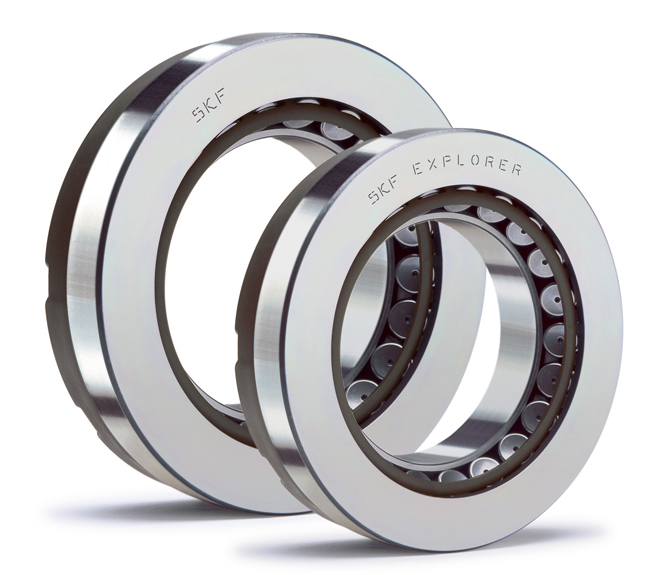
What’s So Special About Thrust Bearings By SKF?
Thrust bearings are critical components in machinery, designed to handle axial loads with precision and efficiency. Among the top manufacturers, SKF thrust bearings stand out for their innovative engineering, unmatched durability, and versatility across industries. Whether you are in manufacturing, automotive, or heavy machinery, understanding what makes SKF thrust bearings unique can help you make informed decisions for your applications.
This blog post explores the key features, types, and applications of SKF thrust bearings, diving into why they are a preferred choice globally. Let’s dive in!
What Are Thrust Bearings and Why Choose SKF?
Understanding Thrust Bearings
Thrust bearings are specialized bearings designed to accommodate axial loads—forces that act parallel to the shaft. Unlike radial bearings, which handle loads perpendicular to the shaft, thrust bearings are built to support forces in one or both directions, depending on the design. They are essential in applications where high axial loads are present, such as in turbines, gearboxes, and heavy machinery.
SKF, a global leader in bearing manufacturing, has been producing high-quality thrust bearings for decades. Their products are engineered to meet stringent performance standards, making them a go-to choice for industries requiring precision and reliability. By incorporating advanced materials and innovative designs, SKF thrust bearings deliver superior performance in demanding environments.
Why SKF Stands Out?
SKF thrust bearings are renowned for their quality and innovation. With a focus on precision engineering, SKF combines cutting-edge technology with rigorous testing to ensure its bearings meet the needs of diverse industries. Their unique selling proposition lies in their ability to offer customized solutions, long service life, and energy-efficient designs. Whether you are looking for SKF spherical roller thrust bearings or single direction thrust bearings, the portfolio of SKF is designed to optimize performance and reduce maintenance costs.
Types of SKF Thrust Bearings
Single Direction Thrust Bearings
- Compact Design: Their small footprint makes them ideal for space-constrained applications like automotive components.
- High Load Capacity: Capable of handling significant axial loads despite their simple construction.
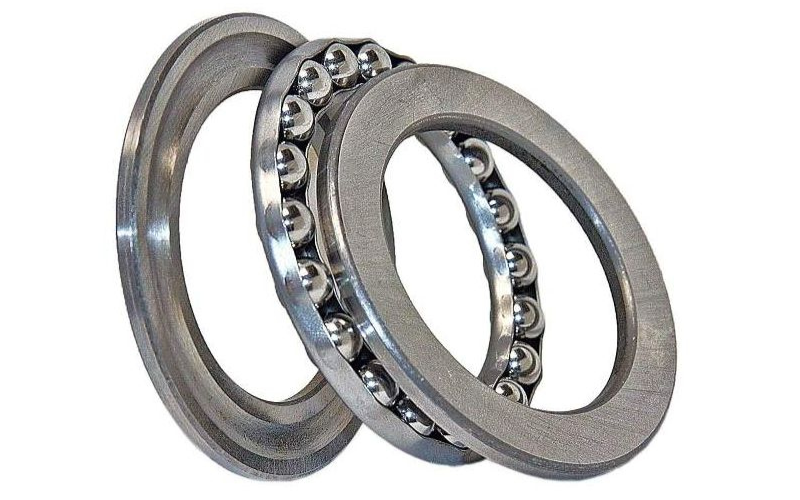
- Ease of Installation: The separable components (shaft washer, housing washer, and ball assembly) simplify assembly and replacement.
- Low Friction: Precision engineering ensures minimal friction, enhancing efficiency in high-speed applications.
- Cost-Effective: Affordable design without compromising on quality, suitable for budget-conscious projects.
Spherical Roller Thrust Bearings
- Self-Aligning: Automatically compensates for shaft misalignment, reducing wear and tear.
- High Load Capacity: Supports both axial and radial loads, ideal for heavy-duty applications.
- Robust Cage Design: Glass fiber-reinforced PA66 cages ensure durability under extreme conditions.
- Vibration Resistance: Engineered to minimize vibrations, enhancing machinery stability.
- Wide Application Range: Suitable for industries like mining, construction, and marine propulsion.
Cylindrical Roller Thrust Bearings
- High Axial Load Capacity: Designed to handle extreme axial loads in heavy-duty machinery.
- Minimal Friction: Optimized roller design reduces friction, improving energy efficiency.
- Durable Cage Material: Glass fiber-reinforced PA66 cages ensure longevity in demanding environments.
- Precision Performance: Maintains accuracy under high loads, ideal for industrial presses.
- Compact Dimensions: Space-efficient design for applications with limited installation space.
Thrust Spherical Plain Bearings
- Maintenance-Free: Steel/PTFE FRP construction eliminates the need for regular lubrication.
- High Wear Resistance: PTFE lining ensures long-term durability in abrasive environments.
- Flexible Movement: Allows angular motion, ideal for articulated joints and hydraulic systems.
- Corrosion Resistance: Steel components are treated to withstand harsh environmental conditions.
- Versatile Applications: Suitable for dynamic loads in construction and industrial equipment.
Key Benefits of SKF Thrust Bearings
Durability and Longevity
SKF thrust bearings are built to last, even in harsh operating conditions. Their use of high-quality materials, such as chrome steel and advanced polymers, ensures resistance to wear and corrosion. This durability translates to reduced downtime and lower maintenance costs, making them a cost-effective solution for businesses.
Precision and Performance
Precision is at the heart of SKF’s design philosophy. Their thrust bearings are engineered to minimize friction and maximize load-carrying capacity, ensuring smooth operation in high-speed applications. For instance, SKF spherical roller thrust bearings are optimized for high axial loads while maintaining alignment, reducing wear on machinery components.
Energy Efficiency
The focus of SKF on sustainability is evident in their energy-efficient bearing designs. By reducing friction and optimizing load distribution, SKF thrust bearings help lower energy consumption in machinery, aligning with modern environmental standards. This makes them a preferred choice for industries aiming to reduce their carbon footprint.
Versatility Across Industries
From automotive to aerospace, thrust bearing applications are vast. SKF thrust bearings are used in wind turbines, marine propulsion systems, construction equipment, and more. Their ability to handle diverse operating conditions makes them a versatile solution for global industries.
Applications of SKF Thrust Bearings
Industrial Machinery
In industrial settings, SKF thrust bearings are used in gearboxes, compressors, and pumps. Their ability to handle high axial loads ensures reliable performance in heavy-duty equipment. For example, cylindrical roller thrust bearings are commonly found in industrial presses, where precision and durability are paramount.
Automotive and Aerospace
The automotive and aerospace industries rely on SKF thrust bearings for components like clutches, transmissions, and landing gear systems. Single direction thrust bearings, such as the SKF 51204, are ideal for compact automotive applications, while spherical roller thrust bearings are used in aerospace for their self-aligning capabilities.
Renewable Energy
In wind turbines, SKF thrust bearings play a critical role in managing axial loads from rotating blades. Their robust design ensures long service life, even in extreme weather conditions, making them a key component in renewable energy systems.
Marine and Construction
Marine propulsion systems and construction equipment benefit from SKF thrust spherical plain bearings, which offer maintenance-free operation and resistance to harsh environments. These bearings are ideal for applications where reliability and low maintenance are essential.
How to Choose the Right SKF Thrust Bearing
Choosing the right SKF thrust bearing involves evaluating several critical factors to ensure optimal performance for your application. Here are six key considerations:
- Assess Load Capacity: Determine the axial and radial load requirements to select a bearing, such as the SKF 51108, that can handle the expected forces.
- Evaluate Speed Requirements: For high-speed applications, choose bearings like single direction thrust bearings designed for low friction and high rotational speeds.
- Consider Environmental Conditions: Select bearings with corrosion-resistant materials or coatings for harsh environments, such as marine or outdoor settings.
- Check for Misalignment Needs: If shaft misalignment is a concern, opt for SKF spherical roller thrust bearings with self-aligning capabilities.
- Use SKF Product Select Tool: Leverage SKF’s online tool to access detailed specifications and match bearings to your application’s needs.
- Consult SKF Experts: Work with SKF distributors or engineers to ensure the bearing meets specific performance and compatibility requirements.
Maintenance Tips for SKF Thrust Bearings
To maximize the lifespan of SKF thrust bearings, regular maintenance is essential. Here are some tips:
- Lubrication: Use the recommended lubricant to reduce friction and wear.
- Alignment: Ensure proper alignment during installation to prevent premature failure.
- Inspection: Regularly check for signs of wear, such as noise or vibration.
- Storage: Store bearings in a clean, dry environment to prevent corrosion.
By following these practices, you can extend the service life of your SKF thrust bearings and optimize machinery performance.
Conclusion
SKF thrust bearings are a cornerstone of precision engineering, offering unmatched durability, performance, and versatility. From single direction thrust bearings to SKF spherical roller thrust bearings, their product range caters to a wide array of industries, from automotive to renewable energy. By choosing SKF, you invest in quality, energy efficiency, and long-term reliability. Whether you are looking to reduce maintenance costs or improve machinery performance, Bearing World can provide the best SKF thrust bearings to deliver exceptional value for your business.
Q: What are SKF bearings distributors?
A: SKF bearings distributors are suppliers authorized to sell SKF’s high-quality bearings for industrial applications.
Q: How to choose an SKF bearings distributor?
A: Verify authorization, assess product range, check technical support, compare delivery options, and request references.
Q: Why choose SKF authorized distributors?
A: Authorized distributors guarantee genuine products and provide expert support, ensuring SKF bearing quality.
Q: What is a bearing distribution network?
A: It is a system of warehouses and logistics that ensures the timely delivery of bearings to customers.
Q: How can I find the best SKF bearings suppliers near me?
A: Search SKF’s official website for authorized distributors with local warehouses or fast shipping.
Q: What ensures SKF bearing quality?
A: Genuine SKF bearings from authorized distributors meet strict manufacturing and performance standards.
Q: Are all industrial bearings suppliers reliable?
A: No, only SKF authorized distributors guarantee authenticity and high-quality service.
Q: What are reliable SKF authorized distributors known for?
A: They offer genuine products, technical expertise, and efficient delivery through a strong distribution network.
Q: How do SKF bearings distributors support industrial applications?
A: They provide tailored bearing solutions, technical support, and reliable supply chain services.
Q: Why is technical support important when choosing SKF bearing suppliers?
A: Technical support ensures proper bearing selection and maintenance, maximizing performance and lifespan.
-
How to Identify and Choose the Right Thrust Bearings?
Imagine designing a high-performance engine for a sleek racing car. Every component must work in harmony to deliver speed, efficiency, and durability. Amid the complex machinery, one unsung hero quietly ensures smooth operation: the thrust bearing. These critical components handle axial loads, keeping rotating shafts stable and efficient. But with so many types available, how do you pick the right one? In this guide, we will explore the different types of thrust bearings, how to identify them, and key factors to consider for your application. Whether you are an engineer, technician, or simply curious about mechanical systems, this article will equip you with practical insights to make informed decisions and optimize performance.
What Are Thrust Bearings?
Thrust bearings are the backbone of many mechanical systems, designed to support axial loads—forces that act parallel to a shaft’s axis. Unlike radial bearings, which handle perpendicular forces, thrust bearings keep things steady under axial pressure. Today, thrust bearings power everything from automotive transmissions to massive marine propellers. Let’s dive into the different types of thrust bearings and how to spot them in action.
Types of Thrust Bearings
Understanding the different types of thrust bearings is the first step to choosing the right one. Each type has unique features tailored to specific applications. Here is a breakdown, complete with analogies to bring their roles to life.
Thrust Ball Bearings
Consider thrust ball bearings as the sprinters of the bearing world—lightweight, fast, and built speed. These bearings feature spherical balls nestled between two washer-like raceways, allowing them to handle low to medium axial loads with minimal friction. You will spot them by their compact design and smooth, ball-filled rings, making them ideal for high-speed applications like automotive clutches or precision machine tools.
- Key Features: Spherical balls, low friction, high-speed capability.
- Applications: Automotive clutches, machine tools, small pumps.
Cylindrical Roller Thrust Bearings
If thrust ball bearings are sprinters, cylindrical roller thrust bearings are the weightlifters—robust and ready for heavy lifting. Their cylindrical rollers, arranged perpendicular to the bearing axis, provide high load capacity for medium to heavy axial forces. Look for their larger, roller-filled design, often found in industrial gearboxes or metallurgical machinery.
- Key Features: Cylindrical rollers, high load capacity, durable.
- Applications: Industrial gearboxes, rotary tables, heavy equipment.
Needle Roller Thrust Bearings
Needle roller thrust bearings are the space-savers of the group, designed for tight spots where axial loads are significant. Their slender, needle-like rollers offer a high length-to-diameter ratio, making them compact yet powerful. You can identify them by their thin profile and numerous small rollers, perfect for automotive transmissions or drive shafts.
- Key Features: Slender rollers, compact design, high load capacity.
- Applications: Automotive transmissions, small mechanical devices.
Spherical Roller Thrust Bearings
Imagine spherical roller thrust bearings as the acrobats of bearings, gracefully handling misalignment while supporting heavy loads. Their barrel-shaped rollers and self-aligning raceways make them stand out, ideal for dynamic environments like marine propellers or aerospace systems. Recent advancements, such as PTFE coatings, enhance their performance in high-duty applications, reducing friction and boosting reliability.
- Key Features: Barrel-shaped rollers, self-aligning, high load rating.
- Applications: Marine propellers, aerospace systems, heavy machinery.
Tapered Roller Thrust Bearings
Tapered roller thrust bearings are all-rounders, built to tackle both heavy axial and radial loads. Their tapered rollers converge at a point on the bearing axis, ensuring efficient load distribution. You will recognize them by their conical roller design, commonly used in automotive applications and construction equipment.
- Key Features: Tapered rollers, supports axial and radial loads, robust.
- Applications: Automotive transmissions, construction equipment, gearboxes.
How to Identify Thrust Bearings in Practice
After exploring different types of thrust bearings, how do you identify them in the real world? Here is a practical guide to distinguish them:
- Check Rolling Elements: Balls for thrust ball bearings; cylindrical/needle for roller types; barrel/tapered for spherical/tapered bearings.
- Assess Load: Thrust ball for light loads; cylindrical/tapered for heavy.
- Look for Self-Alignment: Spherical roller bearings handle misalignment.
- Measure Space: Needle bearings for tight spaces; others are larger.
- Match Application: Thrust ball for clutches; spherical/tapered for heavy machinery.
Factors to Consider When Choosing Thrust Bearings
Choosing the right thrust bearing goes beyond identification. Here are key factors to ensure you select the best fit:
- Load Type and Magnitude: Match the bearing to your application’s axial load. Thrust ball bearings excel with lighter loads, while tapered roller thrust bearings handle heavier ones.
- Operating Speed: High-speed applications favor thrust ball bearings for their low friction, while roller bearings suit slower, high-load scenarios.
- Space Constraints: Needle roller bearings are perfect for compact spaces, unlike bulkier cylindrical or tapered types.
- Misalignment Tolerance: Spherical roller bearings accommodate misalignment, ideal for dynamic environments.
- Material Composition: The bearing material impacts durability and performance. PTFE’s low frictional properties and chemical inertness reduce the risk of failure under extreme conditions, making it a game-changer.
- Lubrication and Maintenance: Ensure the bearing’s lubrication needs align with your application. Some modern bearings, like those with PTFE, require minimal lubrication.
Tips for Maintaining Thrust Bearings
To keep thrust bearings performing at their best, follow these maintenance tips:
- Lubricate Regularly: Use the right lubricant to minimize friction. Bearings with PTFE coatings may require less frequent lubrication due to their low-friction properties.
- Prevent Contamination: Keep dust and debris at bay with regular cleaning and filtered lubricants.
- Ensure Proper Alignment: Misalignment can cause vibration and wear. Double-check installation to avoid stress.
- Monitor Wear: Listen for unusual noises or vibrations, which may signal the need for inspection or replacement.
Why Choosing the Right Thrust Bearing Matters
Picking the correct thrust bearing can make or break your equipment’s performance. A mismatch—like using a thrust ball bearing for a heavy-load application—could lead to premature failure, costly repairs, and downtime. Conversely, choosing the right bearing, such as a spherical roller thrust bearing for a misaligned marine propeller, ensures efficiency and longevity. By mastering the different types of thrust bearings, you can optimize your machinery and avoid costly mistakes.
Conclusion
Thrust bearings may be small, but their impact is massive. From the zippy thrust ball bearings in automotive clutches to the robust spherical roller thrust bearings in marine systems, each type plays a unique role. By understanding their designs, applications, and how to identify them, you can select the perfect bearing for your project. Don’t miss out on our latest blogs on bearings! Subscribe to our blog now.
Q: What are the different types of thrust bearings?
A: The main types are thrust ball bearings, cylindrical roller thrust bearings, needle roller thrust bearings, spherical roller thrust bearings, and tapered roller thrust bearings. Each shine in specific applications based on load and speed.
Q: How do thrust ball bearings differ from roller bearings?
A: Thrust ball bearings use spherical balls for low to medium loads and high speeds, while roller bearings, with cylindrical or tapered rollers, tackle heavier loads with ease.
Q: What applications use cylindrical roller thrust bearings?
A: You will find them in industrial gearboxes, metallurgical machinery, and rotary tables, where they handle medium to heavy axial loads.
Q: How do I choose the right thrust bearing for my project?
A: Consider load magnitude, speed, space, misalignment, and material. For example, PTFE-coated bearings are great for high-duty applications.
Q: Why are needle roller thrust bearings ideal for tight spaces?
A: Their slender rollers pack a punch in compact designs, perfect for automotive transmissions or small devices.
Q: Can spherical roller thrust bearings handle misalignment?
A: Absolutely! Their barrel-shaped rollers and curved raceways make them pros at managing misalignment in dynamic setups.
Q: What role do tapered roller thrust bearings play in automotive applications?
A: They support heavy axial and radial loads in transmissions and gearboxes, ensuring durability under tough conditions.
Q: How do I maintain thrust bearings for longevity?
A: Regular lubrication, contamination control, and alignment checks keep bearings in top shape. PTFE-coated bearings may need less frequent lubrication.
Q: What industries rely on different types of thrust bearings?
A: Automotive, aerospace, marine, and industrial machinery all depend on thrust bearings for smooth, reliable operation.
Q: Where can I find reliable thrust bearing suppliers?
A: Trusted suppliers like Bearings Direct or SKF offer high-quality bearings tailored to your needs.
-
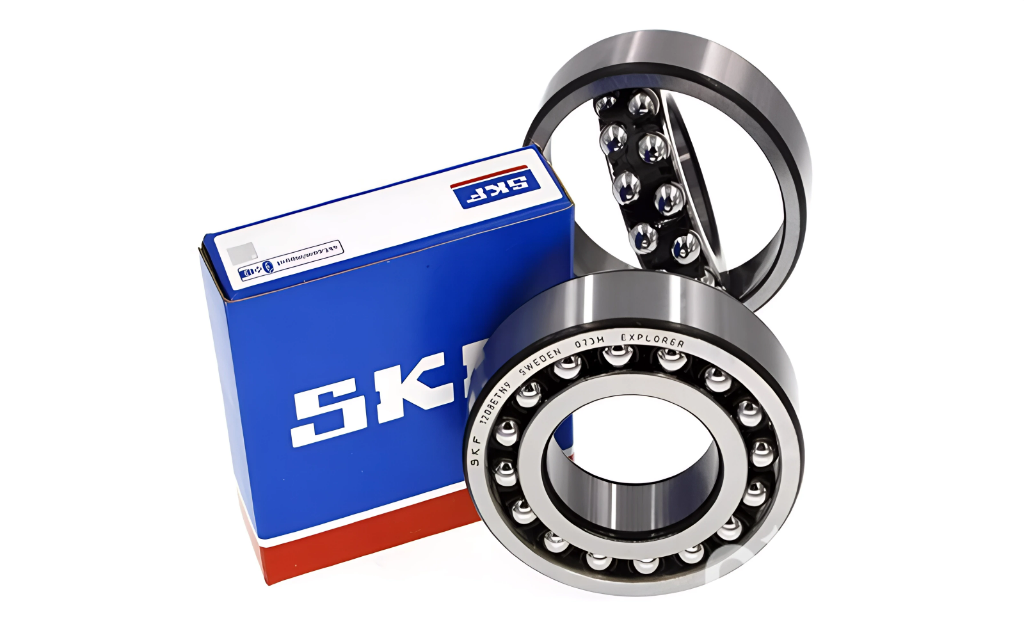
Your Guide to Choose the Best SKF Bearings Distributor
When it comes to sourcing high-quality bearings for industrial applications, selecting the right SKF bearings distributor is critical. SKF, a global leader in bearing manufacturing, is renowned for its precision-engineered products that ensure durability and performance. However, not all distributors are created equal. Choosing a reliable SKF authorized distributor can make the difference between seamless operations and costly downtime. This guide is designed to help businesses, procurement managers, and engineers navigate the process of selecting the best industrial bearings suppliers for their needs. We will cover essential factors like authenticity, service quality, and distribution networks to ensure you make an informed decision. By the end, you will have a clear roadmap to partner with a distributor that aligns with your operational goals.
Why Choosing the Right SKF Bearings Distributor Matters?
Selecting the right SKF bearings distributor goes beyond simply purchasing a product. It is about ensuring consistent quality, timely delivery, and access to technical expertise. SKF bearings are engineered for high performance in industries like manufacturing, automotive, and aerospace. A reputable distributor ensures you receive genuine products, backed by SKF’s quality standards, to maintain operational efficiency.
Partnering with a distributor can lead to issues like counterfeit products, delayed shipments, or inadequate technical support. This can result in equipment failure, increased maintenance costs, and lost productivity. By focusing on SKF authorized distributors, you gain access to a bearing distribution network that prioritizes authenticity and reliability, ensuring your operations run smoothly.
The Importance of SKF Authorized Distributors
SKF authorized distributors are vetted by SKF to meet stringent quality and service standards. These distributors undergo rigorous training and have direct access to the technical resources of SKF, ensuring they can provide expert guidance on bearing selection and application. Choosing an authorized distributor minimizes the risk of purchasing counterfeit or low-quality bearings, which can compromise equipment performance. Additionally, authorized distributors often have access to the latest SKF products and innovations, giving you a competitive edge.
Key Factors to Consider When Choosing an SKF Bearings Distributor
To select the best SKF bearings distributor, you need to evaluate several critical factors. These ensure the distributor aligns with your business needs and provides the quality and service you need.
-
Authenticity and SKF Bearing Quality
The quality of SKF bearings is a hallmark of the brand, but counterfeit products are a growing concern in the market. To ensure SKF bearing quality, always choose SKF authorized distributors. These distributors source products directly from SKF, guaranteeing authenticity. Look for certifications or verification seals on the distributor’s website or inquire about their sourcing process. A reliable distributor will provide documentation, such as certificates of authenticity, to confirm the bearings’ origin.
-
Extensive Bearing Distribution Network
A robust bearing distribution network is essential for timely delivery and product availability. Top distributors maintain a wide inventory of SKF bearings, from standard ball bearings to specialized roller bearings for heavy-duty applications. They also have partnerships with logistics providers to ensure fast and reliable shipping, minimizing downtime. Ask potential distributors about their inventory management and delivery capabilities, especially if you operate in multiple locations or require just-in-time delivery.
-
Technical Expertise and Support
Industrial applications often require tailored bearing solutions. The best industrial bearings suppliers offer technical expertise to help you select the right bearings for your equipment. They should provide support for installation, maintenance, and troubleshooting, ensuring optimal performance. Look for distributors with in-house engineers or access to the technical resources of SKF. This is particularly important for complex applications in industries like mining or renewable energy, where precision is critical.
-
Customer Service and Reliability
Reliability is key when choosing a distributor. Reliable SKF authorized distributors prioritize customer satisfaction by offering responsive communication, flexible ordering options, and after-sales support. Check reviews or testimonials from other businesses to gauge the reputation of the distributor. A distributor with a track record of consistent service is more likely to meet your expectations and handle urgent requests efficiently.
-
Pricing and Value-Added Services
While cost is a factor, it shouldn’t be the sole deciding factor. The cheapest option may compromise on SKF bearing quality or service. Instead, look for distributors that offer competitive pricing alongside value-added services, such as customized bearing solutions, training programs, or predictive maintenance tools. These services can enhance your operational efficiency and reduce long-term costs, providing greater value than a low upfront price.
How to Choose an SKF Bearings Distributor: A Step-by-Step Guide
Finding the best SKF bearings distributor requires a systematic approach. Follow these steps to ensure you partner with a distributor that meets your needs.
-
Step 1: Verify Authorization
Start by confirming that the distributor is an authorized SKF distributor. Visit SKF’s official website to find a list of authorized distributors in your region. This step ensures you are dealing with a legitimate supplier who adheres to SKF’s quality standards.
-
Step 2: Assess Product Range
Evaluate the inventory to ensure they carry the SKF bearings you need. Whether you require deep groove ball bearings, cylindrical roller bearings, or specialized solutions, the distributor should have a comprehensive range. A strong bearing distribution network ensures they can source rare or custom bearings if needed.
-
Step 3: Check Technical Support Capabilities
Inquire about the technical support offerings of distributors. Do they provide guidance on bearing selection or maintenance? Can they assist with failure analysis or lubrication recommendations? Distributors with strong technical expertise can help you maximize the lifespan of your bearings.
-
Step 4: Compare Delivery and Logistics
Timely delivery is critical in industrial settings. Ask about the bearing distribution network, including their warehousing and shipping capabilities. If you’re searching for the best SKF bearings suppliers near me, prioritize those with local warehouses or fast shipping options to your location.
-
Step 5: Request Quotes and References
Obtain quotes from multiple industrial bearings suppliers to compare pricing and services. Additionally, ask for references or case studies from similar businesses to verify reliability. This step helps you make an informed decision based on real-world performance.
Common Mistakes to Avoid When Choosing an SKF Bearings Distributor
- Choosing Based on Price Alone: Low prices may indicate counterfeit products or poor service. Prioritize SKF bearing quality and reliability over cost.
- Ignoring Authorization: Non-authorized distributors may sell substandard or counterfeit bearings, leading to equipment failure.
- Overlooking Technical Support: A distributor without technical expertise may struggle to provide tailored solutions for your applications.
- Neglecting Delivery Capabilities: A weak bearing distribution network can lead to delays, disrupting your operations.
Benefits of Partnering with Reliable SKF Authorized Distributors
- Guaranteed Quality: Access to genuine SKF bearings ensures durability and performance.
- Expert Guidance: Technical support from trained professionals helps optimize bearing performance.
- Efficient Supply Chain: A strong bearing distribution network ensures timely delivery and inventory availability.
- Long-Term Savings: High-quality bearings and value-added services reduce maintenance costs and downtime.
Conclusion
Choosing the right SKF bearings distributor is a critical decision that impacts business efficiency and profitability. By prioritizing SKF authorized distributors, you ensure access to genuine products, expert support, and a reliable bearing distribution network. Focus on factors like SKF bearing quality, technical expertise, and customer service to find a distributor that aligns with your needs. Subscribe to our blog for more industry insights and tips on optimizing your supply chain!
Q: What are SKF bearings distributors?
A: SKF bearings distributors are suppliers authorized to sell SKF’s high-quality bearings for industrial applications.
Q: How to choose an SKF bearings distributor?
A: Verify authorization, assess product range, check technical support, compare delivery options, and request references.
Q: Why choose SKF authorized distributors?
A: Authorized distributors guarantee genuine products and provide expert support, ensuring SKF bearing quality.
Q: What is a bearing distribution network?
A: It is a system of warehouses and logistics that ensures the timely delivery of bearings to customers.
Q: How can I find the best SKF bearings suppliers near me?
A: Search SKF’s official website for authorized distributors with local warehouses or fast shipping.
Q: What ensures SKF bearing quality?
A: Genuine SKF bearings from authorized distributors meet strict manufacturing and performance standards.
Q: Are all industrial bearings suppliers reliable?
A: No, only SKF authorized distributors guarantee authenticity and high-quality service.
Q: What are reliable SKF authorized distributors known for?
A: They offer genuine products, technical expertise, and efficient delivery through a strong distribution network.
Q: How do SKF bearings distributors support industrial applications?
A: They provide tailored bearing solutions, technical support, and reliable supply chain services.
Q: Why is technical support important when choosing SKF bearing suppliers?
A: Technical support ensures proper bearing selection and maintenance, maximizing performance and lifespan.
-
-
Choosing the Right SKF Bearings: Factors to Consider
When it comes to mechanical systems and industrial machinery, selection of the right bearings can make a difference between optimal performance and costly downtime.
SKF bearings, renowned for their precision engineering and reliability, offer a comprehensive range of solutions for various applications. However, choosing the right SKF bearing requires careful consideration of multiple factors to ensure optimal performance, longevity, and cost-effectiveness.This comprehensive guide explores the essential factors to consider when selecting SKF bearings for your specific application, helping you make informed decisions that will enhance your machinery’s performance and extend its operational life.
Matching Power to Performance: Critical Load Considerations
The most fundamental consideration in bearing selection is understanding the load requirements.
SKF bearings are capable of handling the expected loads throughout their operational life.Load Direction and Magnitude
Different types of bearings are designed to handle specific load configurations:
- Radial loads: Forces acting perpendicular to the shaft axis
- Axial loads: Forces acting parallel to the shaft axis
- Combined loads: Simultaneous radial and axial forces
Deep groove ball bearings are versatile and can handle both radial and axial loads in both directions, making them suitable for a wide range of applications. For predominantly radial loads, cylindrical roller bearings offer higher load capacity due to their line of contact compared to ball bearings of the same size.
Dynamic vs Static Load Ratings
When selecting SKF bearings, consider both dynamic and static load ratings:
- Basic dynamic load rating (C): The constant load that a bearing can endure for one million revolutions
- Basic static load rating (C₀): The load that produces specific plastic deformation
Speed Demons: Finding Your Sweet Spot
Speed capability is crucial for bearing selection, as different bearing types have varying speed limits.
- Reference speed: Based on thermal conditions and can be adjusted through lubrication modifications
- Limiting speed: The mechanical speed limit is determined by cage stability, strength, and centrifugal forces
High-speed applications may require specialized SKF bearings with ceramic elements, which offer reduced centrifugal forces due to their lower density compared to steel.
Surviving the Elements: Environmental Mastery
The operating environment significantly impacts bearing performance and selection.
Temperature Warriors
Temperature affects bearing performance in multiple ways:
- High temperatures can reduce lubricant life, decrease raceway hardness, and cause seal failure
- Low temperatures can increase lubricant viscosity and make seals brittle
- Standard SKF bearings typically operate best between 160°F and 230°F (71°C to 110°C)
Contamination Defense
Environmental contaminants can severely impact on bearing life. SKF bearings offer various sealing options:
- Metal shields: Non-contacting, suitable for clean environments and high speeds
- Rubber seals: Contact seals providing better contamination protection
- Labyrinth seals: For heavy contamination environments
Precision That Matters
Different applications require varying levels of precision.
SKF bearings are available in different tolerance classes to meet specific accuracy requirements:- Standard tolerance: Suitable for general industrial applications
- Higher precision grades: Required for machine tool spindles, measuring instruments, and precision equipment
Precision requirements influence not only bearing selection but also mounting procedures and shaft/housing tolerances.
Smooth Operations: The Critical Role of Proper Lubrication
Proper lubrication is essential for bearing performance and life. Consider these factors:
Lubrication Champions
- Grease lubrication: Simpler housing design, good for moderate speeds, easier maintenance
- Oil lubrication: Better for high speeds, superior cooling, easier foreign matter removal
Lubricant Selection Strategy
The choice of lubricant depends on:
- Operating temperature range
- Speed requirements
- Load conditions
- Environmental factors
Making the Perfect Fit: Installation Considerations
Available space often dictates bearing selection. Consider:
Space Constraints
- Bearing envelope dimensions
- Shaft diameter requirements
- Housing limitations
Mounting Mastery
Different mounting methods may be required:
- Press fit: For smaller bearings with tight interference fits
- Thermal mounting: For larger bearings requiring heating for installation
Bearing Type Breakdown: Your Complete Selection Guide
SKF offers various bearing types, each optimized for specific applications:
Deep Groove Ball Bearings
- Most versatile type
- Handle radial and axial loads
- Suitable for high speeds
- Low friction and quiet operation
Angular Contact Ball Bearings
- Designed for combined loads
- Higher axial load capacity than deep groove bearings
- Available in single or double row configurations
Cylindrical Roller Bearings
- High radial load capacity
- Accommodate thermal expansion
- Suitable for high-speed applications
Spherical Roller Bearings
- Self-aligning capability
- Heavy load capacity
- Accommodate misalignment
Thrust Bearings
- Designed specifically for axial loads
- Available in ball and roller configurations
- Used in vertical shaft applications
Next-Level Selection Strategies
Material Mastery
SKF bearings are available in different materials:
Standard Steel
High-quality bearing steel provides excellent performance for most applications.
Stainless Steel
For corrosive environments or applications requiring magnetic neutrality.
Ceramic Hybrid Bearings
Ceramic rolling elements with steel races offer:
- Reduced friction
- Electrical insulation
- Lower weight
- Extended life in challenging conditions
Cage Design Excellence
Cage selection influences bearing performance:
- Steel cages: Standard for most applications
- Brass cages: For larger bearings and high-speed applications
- Polymer cages: For special applications requiring chemical resistance
Real-World Champions: Industry Applications
Automotive Excellence
SKF bearings in automotive applications must handle varying loads, speeds, and environmental conditions. Wheel bearings, engine components, and transmission systems all require specific bearing solutions.
Aerospace Precision
Aerospace applications demand bearings that can withstand extreme temperatures, high speeds, and reliability requirements. SKF bearings used in aircraft engines, control systems, and landing gear must meet stringent quality standards.
Industrial Powerhouses
Manufacturing equipment, pumps, motors, and conveyors require SKF bearings selected for specific operational demands including load capacity, speed, and environmental resistance.
Keeping the Wheels Turning: Maintenance Excellence
Proper maintenance extends bearing life:
Regular Health Checks
- Temperature monitoring
- Vibration analysis
- Visual inspection for damage
- Lubrication condition assessment
Predictive Maintenance Power
Modern bearing condition monitoring can predict failure before it occurs, reducing downtime and maintenance costs.
Smart Investments for Long-Term Success
When selecting SKF bearings, consider the total cost of ownership:
- Initial bearing cost
- Installation and maintenance costs
- Expected service life
- Downtime costs
- Energy efficiency implications
Your Partner in Success
Partnering with authorized SKF bearing distributors provides:
- Technical support and application engineering
- Genuine product assurance
- Training and installation guidance
- Comprehensive product availability
Conclusion
Selecting the right SKF bearings requires careful evaluation of multiple interdependent factors including load requirements, operating conditions, environmental factors, and performance expectations. By systematically considering each factor and understanding their relationships, engineers and maintenance professionals can make informed decisions that optimize machinery performance, extend operational life, and minimize total cost of ownership.
The investment in proper bearing selection pays dividends through improved reliability, reduced maintenance requirements, and enhanced operational efficiency. With SKF’s comprehensive product range and technical support resources, finding the optimal bearing solution for any application becomes a manageable and rewarding process.
Remember that bearing selection is often an iterative process, and consulting with SKF technical experts or authorized distributors can provide valuable insights for challenging applications. The goal is not just to select a bearing that works, but to choose the optimal solution that delivers the best long-term value for your specific application.
Q: What is the most important factor when selecting SKF bearings?
A: Load characteristics – the bearing must handle expected radial and axial loads throughout its service life.
Q: How do I determine the proper bearing size?
A: Calculate equivalent dynamic loads, determine required life1 expectancy, and match appropriate load ratings.
Q: Grease vs oil lubrication – which is better?
A: Grease offers a simpler design for moderate speeds; oil provides better cooling for high-speed applications.
Q: How do environmental conditions affect bearing selection?
A: Temperature, contamination, and moisture influence material selection, sealing requirements, and lubrication choices.
Q: When should I consider ceramic hybrid bearings?
A: For high-speed applications, electrical sensitivity, or when extended service life justifies higher initial costs.
Q: What role does precision play in selection?
A: Precision determines tolerance classes and mounting procedures – higher precision needed for machine tools and measuring equipment.
Q: What maintenance practices extend bearing life?
A: Regular lubrication, temperature monitoring, vibration analysis, proper installation, and contamination prevention.
Q: When do I need special bearing materials?
A: Stainless steel for corrosive environments, ceramic for high speeds/electrical isolation, and special treatments for extreme temperatures.
Q: What support is available for complex applications?
A: SKF offers technical support through distributors, application engineering services, and specialized selection software.
Q: How do I ensure optimal bearing performance?
A: Proper selection, correct installation, appropriate lubrication, regular monitoring, and partnering with authorized distributors.
-
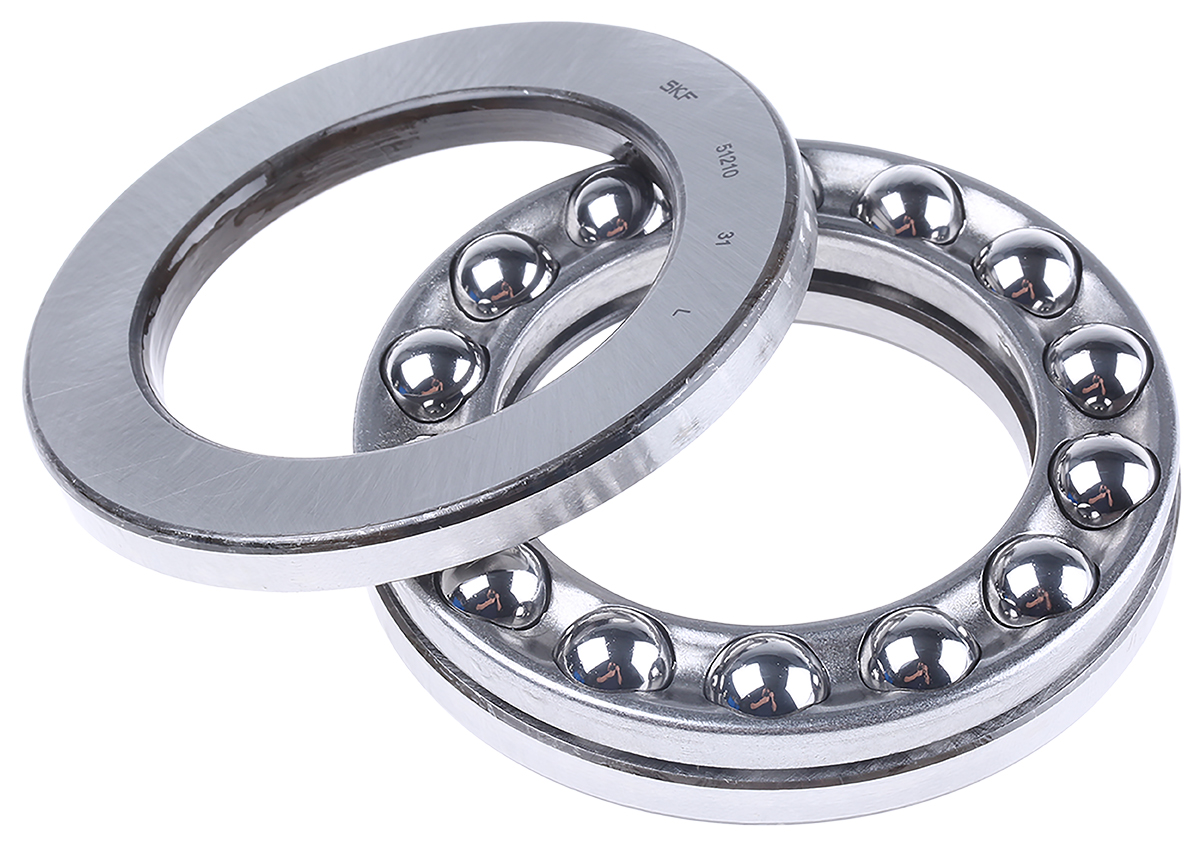
Understanding SKF Thrust Bearings: Applications, Benefits, and Maintenance Tips
SKF thrust bearings are engineered to handle axial loads with precision and durability, making them indispensable in heavy machinery and automotive systems. These specialized bearings minimize friction, accommodate misalignment, and extend equipment life. In Saudi Arabia’s industrial and oil-&-gas sectors, Bearing World leverages its 33-year legacy to supply genuine SKF bearings through an extensive network across Riyadh, Jeddah, Dammam, Yanbu, and Jubail. This post explores the types, applications, advantages, and maintenance best practices for SKF thrust bearings, helping maintenance managers and plant engineers optimize machinery performance and uptime.
Types of SKF Thrust Bearings
SKF offers four main thrust bearing designs, each tailored to specific load and speed conditions:
Thrust Ball Bearings
Ideal for low-axial loads and high speeds, these bearings consist of shaft and housing washers with steel balls guided by a cage. They support pure axial loads but not radial forces, making them suitable for small motors and automotive clutches.
Cylindrical Roller Thrust Bearings
Featuring cylindrical rollers in a cage, they handle moderate to heavy axial loads and some radial forces. Their large contact area makes them ideal for industrial compressors and machine tool tailstocks.
Tapered Roller Thrust Bearings
With tapered rollers and raceways, these bearings carry substantial axial forces. Their design distributes heavy loads efficiently, used in vehicle transmissions and heavy-duty presses.
Spherical Roller Thrust Bearings
Equipped with asymmetrical, barrel-shaped rollers, they manage combined axial and radial loads and compensate for shaft misalignment. Applications include wind turbines and marine propulsion systems.
Key Applications in Industrial Sectors
SKF thrust bearings play critical roles across industries:
- Oil & Gas: Support axial thrust in pump shafts and drilling rigs under high pressures.
- Power Generation: Manage axial loads in steam and gas turbines for reliable electricity production.
- Transportation: Used in automotive gearboxes and heavy-duty vehicle transmissions for improved durability.
- Manufacturing: Enhance performance in metal forming presses, wrapping machines, and rolling mills.
- Marine: Provide misalignment tolerance and high axial load capacity in ship propulsion systems.
Benefits of SKF Thrust Bearings
SKF’s design and material innovations deliver multiple advantages:
-
Enhanced Load Capacity
Ultra-clean steel and proprietary heat treatment increases wear resistance and toughness, boosting static and dynamic load ratings by up to 20% compared to standard bearings.
-
Superior Misalignment Tolerance
Spherical roller designs accommodate up to 3° misalignment, reducing bearing stress and preventing premature failure in uneven shaft conditions.
-
Extended Service Life
SKF Explorer performance class bearings feature optimized geometry and improved surface finish, offering up to 50% longer life under identical operating conditions.
-
Reduced Friction and Heat
Close tolerances and precision manufacturing minimize internal friction, enabling higher speed capability and lower operating temperatures by 10–15%.
Maintenance Tips for Longevity
Proper maintenance extends bearing life and prevents unplanned downtime:
Regular Inspection & Lubrication
- Use recommended greases with EP additives and re-lubricate at intervals specified in SKF catalogs to maintain an oil film and prevent metal contact.
- Monitor bearing temperature and vibration; rising values indicate lubrication breakdown or contamination.
Correct Mounting & Dismounting
- Employ induction heaters or hydraulic tools for interference fits, avoiding hammers and oil baths that can damage raceways.
- Follow SKF’s mounting guidelines to ensure press fits and prevent skewed rollers.
Alignment Checks
- Perform shaft alignment using dial indicators or laser tools to avoid side loads and uneven stress distribution.
- Realign whenever machine parts are replaced or disassembled to maintain optimal bearing performance.
Clean Environment
- Keep bearings in protective packaging until installation; avoid exposing them to moisture, dust, or debris during assembly.
- Use clean solvents and air-dry or moisture-free compressed air when cleaning bearings for reuse.
Conclusion
SKF thrust bearings deliver robust axial load management, exceptional misalignment tolerance, and extended service life through advanced materials, precision design, and specialized maintenance practices. Partnering with Bearing World ensures access to genuine SKF products and expert support in Saudi Arabia’s industrial landscape. By following proper installation, lubrication, and monitoring protocols, maintenance teams can maximize machinery uptime and reduce total cost of ownership. Ready to optimize your operations? Subscribe for more insights and technical tips from Bearing World.
Q: What makes SKF thrust bearings stand out in high-load applications?
A: SKF thrust bearings use ultra-clean steel and proprietary heat treatment to enhance fatigue strength and wear resistance, increasing load capacity by up to 20%.
Q: How often should SKF thrust bearings be lubricated?
A: Relubrication intervals depend on operating speed and temperature; follow SKF grease recommendations and reapply every 1,000–2,000 operating hours or per SKF catalog guidelines.
Q: Can SKF spherical roller thrust bearings handle misalignment?
A: Yes, they accommodate angular misalignment up to 3°, thanks to their spherical roller design, reducing stress under shaft deflection.
Q: What are the best practices for mounting SKF thrust bearings?
A: Use induction heating or hydraulic tools for press fits, ensure clean mounting environment, and avoid direct hammering on bearing surfaces.
Q: How do I bearing lubrication issues early?
A: Monitor bearing temperature, vibration levels, and noise; spikes indicate lubrication breakdown or contamination, prompting timely maintenance.
Q: Are SKF Explorer thrust bearings worth the upgrade?
A: SKF Explorer bearings offer up to 50% longer life and higher load capacity, making them a cost-effective upgrade for critical applications.
Q: What is the difference between thrust ball and cylindrical roller thrust bearings?
A: Thrust ball bearings suit low-axial, high-speed scenarios, while cylindrical roller thrust bearings handle heavier axial loads and some radial forces.
Q: Can SKF thrust bearings be reused after cleaning?
A: Yes, if inspected and tested for damage; clean with approved solvents, air-dry, protect with light grease, and wrap in waterproof paper before storage9.
Q: How do I choose the right SKF thrust bearing type?
A: Assess axial and radial load magnitudes, operating speed, misalignment, and space constraints to match bearing design to application needs.
Q: Where can I source genuine SKF thrust bearings in Saudi Arabia?
A: Contact Bearing World for authentic SKF thrust bearings, expert selection advice, and local support across Riyadh, Jeddah, Dammam, Yanbu, and Jubail.
-
From Power Transmission to Efficiency: A Complete Guide to Industrial Drive Belts
Industrial drive belts represent the backbone of modern power transmission systems, serving as critical components that transfer mechanical energy between rotating shafts across countless applications. These flexible loops of engineered materials have evolved from simple leather strips to sophisticated polymer composites, revolutionizing how machinery operates in manufacturing facilities throughout Saudi Arabia and the broader Middle East region. From the oil and gas sector’s heavy-duty compressors to manufacturing plants’ conveyor systems, industrial drive belts ensure seamless power transfer while maximizing operational efficiency. Understanding the principles, applications, and maintenance requirements of these essential components is fundamental for maintenance managers, plant engineers, and procurement officers seeking to optimize their facility’s performance and reduce operational costs.
Understanding Industrial Drive Belt Systems
What Are Industrial Drive Belts?
Industrial drive belts are flexible loops of material specifically designed to transfer rotational power between pulleys or sheaves mounted on parallel shafts. Unlike rigid mechanical connections such as gears or couplings, these power transmission components provide smoother, more continuous energy transfer while accommodating slight misalignments that would typically damage more rigid systems. The fundamental operation relies on friction between the belt surface and pulley grooves, where the driving pulley’s rotation causes the belt to move, subsequently rotating the driven pulley.
Modern industrial belts incorporate advanced materials and precision manufacturing techniques to deliver exceptional performance under demanding conditions. These belt drive systems offer several distinct advantages over other power transmission methods, including quieter operation compared to gear systems, minimal lubrication requirements, and excellent vibration isolation that protects sensitive equipment from harmful oscillations.
Key Components of Belt Drive Systems
A complete industrial belt drive system consists of several critical components working in harmony. The primary elements include the belt itself, pulleys or sheaves, tensioning systems, and support structures. The belt tensioner maintains proper tension throughout operation, while tensioning pulleys and deflection rollers guide the belt’s path and ensure optimal contact with drive surfaces.
The pulleys feature precisely machined grooves that match the belt’s cross-sectional profile, creating the necessary friction for power transmission. These components must be manufactured to exacting tolerances to ensure proper belt tracking and prevent premature wear. Modern systems often incorporate automated tensioning mechanisms that maintain optimal belt tension throughout the component’s service life.
Types of Industrial Drive Belts
V-Belt Systems
V-belts represent the most used belt type in power transmission applications, providing an optimal combination of traction, speed transfer, and service life. The trapezoidal or “V” shape wedges into matching grooves on pulleys, creating increased friction as the load increases. This wedging action generates superior power distribution and torque transmission compared to flat belt alternatives.
Classical V-belts typically handle loads up to moderate power levels and are suitable for center distances below one meter. These industrial drive belts achieve efficiency ratings of approximately 94-98% under optimal conditions. However, their efficiency can decrease to below 90% without proper maintenance and tension. V-belts are commonly employed in electric pumps, compressors, and machine tools across various industrial applications.
Timing Belt Applications
Timing belts, also known as synchronous belts, provide precise power transmission without slippage through their toothed design that meshes with corresponding pulley teeth. These belts maintain exact timing relationships between connected components, making them essential for applications requiring synchronized movement. Industrial timing belts typically achieve efficiency ratings of 98-99% due to their positive engagement and minimal slip characteristics.
The construction of timing belts involves synthetic rubber compounds reinforced with tensile cords, providing the necessary strength for high-load applications. Their ability to maintain precise timing makes them ideal for manufacturing equipment, automation systems, and robotics, where accurate control is paramount. Unlike V-belts, timing belts require minimal maintenance after initial installation and tension.
Multi-Ribbed Belt Technology
Multi-ribbed belts combine the advantages of both flat and V-belt designs while addressing their respective limitations. These belts feature multiple longitudinal wedge-shaped ribs on a flat belt base, enabling them to handle higher power transmission requirements in more compact installations. The ribbed design provides increased surface contact area, resulting in improved power transmission capacity compared to single V-belts.
This belt type excels in high-power applications where space constraints prevent the use of multiple V-belts. Multi-ribbed belts operate more quietly than traditional V-belts and provide superior flexibility, making them suitable for applications with smaller pulley diameters.
Power Transmission Efficiency and Performance
Maximizing Belt Drive Efficiency
Belt drive efficiency depends on several interconnected factors that must be optimized for peak performance. Load capacity represents the primary consideration, with maximum efficiency achieved when operating at or near the belt’s rated capacity. Both under belting and over belting conditions reduce efficiency and can lead to premature failure.
Proper belt tension is crucial for maintaining optimal efficiency throughout the service life. Under-tensioned belts experience excessive slip and heat generation, while over-tensioned belts create unnecessary bearing loads and reduce component life. Regular tension monitoring using appropriate measurement tools ensures consistent performance.
Efficiency Comparison with Alternative Systems
High-quality industrial belts typically operate at 95-98% efficiency, making them competitive with other power transmission methods. This efficiency level, combined with their shock absorption capabilities and overload protection characteristics, makes belts indispensable across numerous applications. Timing belts can achieve even higher efficiency ratings of 98-99% due to their positive engagement design.
When compared to chain drives, belt systems offer significant advantages in noise reduction, maintenance requirements, and environmental compatibility. While chain drives may provide higher torque capacity and durability, belt drives excel in applications where quiet operation and minimal maintenance are priorities.
Industrial Applications
Manufacturing and Production Systems
Industrial drive belts find extensive application in manufacturing environments where reliable power transmission is essential. These systems power conveyor belts, production machinery, and material handling equipment across diverse industries including automotive, food processing, and textile manufacturing. The ability to accommodate varying shaft distances and provide smooth power transmission makes belts ideal for complex production line configurations.
In Saudi Arabia’s manufacturing sector, belt drives are particularly valuable due to their ability to operate effectively in high-temperature environments when properly selected. Specialized belt materials designed for extreme conditions to ensure reliable operation in the region’s challenging climate.
Oil and Gas Industry Applications
The oil and gas sector relies heavily on industrial drive belts for powering critical equipment including pumps, compressors, and fans. These applications demand exceptional reliability and performance under extreme operating conditions. Belt drives provide the necessary power transmission while offering the flexibility to accommodate the thermal expansion common in petrochemical facilities.
SKF industrial drive belts have proven particularly effective in these demanding applications, providing the durability and performance required for continuous operation in harsh environments. The belts’ resistance to oil, heat, and chemical exposure makes them ideal for refineries and processing facilities throughout the Middle East region.
Heavy Industrial and Mining Operations
Mining and heavy industrial operations present unique challenges for power transmission systems, requiring components that can withstand extreme loads, abrasive environments, and continuous operation. Industrial drive belts designed for these applications incorporate specialized materials and construction techniques to ensure reliable performance under severe conditions.
The ability to absorb shock loads while maintaining consistent power transmission make industrial drive belts valuable in applications where sudden load changes are common. This characteristic protects expensive downstream equipment from damage while ensuring operational continuity.
Maintenance and Optimization Strategies
Preventive Maintenance Best Practices
Implementing a comprehensive maintenance program is essential for maximizing belt drive system performance and longevity. Regular inspection schedules should include visual examination for cracks, fraying, and unusual wear patterns. Temperature monitoring using infrared thermometers helps identify potential problems before they result in system failure.
Proper alignment verification using string lines, straight edges, or laser alignment tools ensures optimal belt tracking and prevents premature wear. V-belt drives should maintain alignment within 0.5 degrees or 1/10 inch per foot of center distance span, while timing belts require even tighter tolerances of 0.25 degrees.
Troubleshooting Common Issues
The most frequent causes of premature belt failure include improper tension, misalignment, and environmental factors. Glazed or hardened belt sidewalls typically indicate insufficient tension, while excessive edge wear suggests misalignment issues. Systematic troubleshooting using appropriate tools and techniques can identify and resolve these problems before they cause system failure.
Environmental factors such as excessive heat, oil contamination, and abrasive particles can significantly impact belt performance. Selecting appropriate belt materials and implementing protective measures helps mitigate these challenges, particularly in demanding industrial environments.
Cost-Effective Maintenance Strategies
Balancing maintenance costs with system reliability requires a strategic approach that considers both immediate expenses and long-term operational costs. While more efficient belt types may have higher initial costs, their improved performance and longer service life often provide superior overall value. Energy savings from improved efficiency can quickly offset higher component costs, particularly in high-power applications.
Regular maintenance scheduling helps prevent unexpected failures that can result in costly downtime and emergency repairs. A general guideline suggests allocating 2-5% of equipment value annually for maintenance, with proper planning helping optimize these investments.
Selection Criteria and Specifications
Application-Specific Belt Selection
Choosing the appropriate industrial drive belt requires careful consideration of multiple factors including power requirements, operating speed, environmental conditions, and space constraints. Load capacity must match or exceed application requirements while considering service factors for shock loads and varying operating conditions. Speed limitations must be observed, with classic V-belts typically limited to 30 m/s maximum belt speed.
Environmental considerations play a crucial role in belt selection, particularly in Saudi Arabia’s climate. High-temperature applications require specialized materials that maintain properties under extreme conditions, while exposure to chemicals or oils necessitates resistant compounds.
Quality Standards and Performance Metrics
Industrial belt specifications should meet or exceed relevant industry standards to ensure reliable performance and compatibility. SKF industrial belts exemplify these quality standards through rigorous testing and quality control processes that ensure consistent performance across diverse applications. These belts undergo extensive evaluation for tensile strength, flexibility, temperature resistance, and durability.
Performance metrics should include efficiency ratings, service life expectations, and maintenance requirements. Premium belt manufacturers provide detailed specifications and application guidelines that help ensure optimal selection and installation.
Future Trends and Innovations
Advanced Materials and Construction
The evolution of industrial drive belts continues with the development of advanced materials that provide superior performance and longevity. Modern timing belts utilize neoprene reinforced with fiberglass, steel, or Kevlar, while polyurethane options offer enhanced chemical resistance and flexibility. These material advances enable belts to withstand higher loads, temperatures, and environmental challenges.
Manufacturing processes have also evolved to provide more precise belt construction and improved consistency. Automated production lines with stringent quality management systems ensure reliable performance across all belt types.
Smart Monitoring and Predictive Maintenance
Emerging technologies enable real-time monitoring of belt drive system performance, allowing predictive maintenance strategies that minimize downtime and optimize replacement scheduling. Vibration analysis, temperature monitoring, and tension measurement systems provide early warning of potential issues.
These advanced monitoring capabilities are particularly valuable in critical applications where unexpected failures can result in significant production losses. Integration with plant-wide maintenance management systems enables optimized scheduling and resource allocation.
Conclusion
Industrial drive belts represent a critical component in modern power transmission systems, offering an optimal balance of efficiency, reliability, and cost-effectiveness for diverse applications across Saudi Arabia’s industrial landscape. From V-belts providing robust power transmission in manufacturing environments to precision timing belts ensuring synchronized operation in automated systems, these components enable the smooth operation of countless industrial processes.
The key to maximizing performance lies in proper selection, installation, and maintenance practices that consider application-specific requirements and environmental conditions. As industries continue to prioritize efficiency and reliability, investing in quality belt drive systems from trusted manufacturers like SKF through established distributors such as Bearing World ensures optimal performance and long-term value.
By implementing comprehensive maintenance strategies and staying current with technological advances, industrial facilities can achieve significant improvements in operational efficiency while reducing total cost of ownership.
Ready to optimize your power transmission systems? Contact Bearing World today for expert guidance on selecting the ideal industrial drive belts for your Saudi Arabian operations. Subscribe to our blog for the latest insights on power transmission solutions and maintenance best practices.
Q: What factors determine industrial drive belt for high-temperature environments?
A: Belt selection for high-temperature applications requires consideration of material composition, operating temperature limits, and thermal expansion characteristics. Heat-resistant materials such as specialized rubber compounds and reinforced synthetic materials maintain properties under extreme conditions. Proper ventilation and cooling systems also contribute to belt longevity in high-temperature environments.
Q: How do industrial drive belts compare to chain drives in terms of maintenance requirements?
A: Industrial drive belts typically require significantly less maintenance than chain drives due to their self-lubricating properties and reduced number of moving parts. While chain drives require regular lubrication and tension adjustments, belt drives need only periodic inspection and tension verification. However, chain drives generally offer longer service life and higher load capacity in heavy-duty applications.
Q: What is the typical efficiency range for different types of industrial drive belts?
A: V-belts typically achieve 92-97% efficiency when properly maintained, while timing belts can reach 98-99% efficiency due to their positive engagement design. Multi-ribbed belts generally operate at 95-98% efficiency, combining the advantages of both flat and V-belt designs. Efficiency decreases with improper tension, misalignment, and normal wear over time.
Q: How often should industrial drive belt tension be checked and adjusted?
A: V-belts should be checked within hours of installation and then every 3-6 months during normal operation. Timing belts require proper initial tensioning but need only periodic monitoring due to their minimal stretch characteristics. Environmental conditions and application severity may require more frequent inspection intervals.
Q: What are the warning signs of industrial drive belt failure?
A: Common warning signs include visible cracks or fraying, glazed sidewalls, unusual noise during operation, and excessive vibration. Temperature increases beyond normal operating ranges and reduced system efficiency also indicate potential belt problems. Regular inspection helps identify these issues before catastrophic failure occurs.
Q: Can industrial drive belts effectively in dusty or contaminated environments?
A: Industrial drive belts can operate in dusty environments when properly protected and maintained. Enclosed guards help prevent contamination while regular cleaning removes accumulated debris. Some belt materials offer enhanced resistance to abrasive particles and chemical exposure.
Q: What is the impact of belt drive misalignment on system performance?
A: Misalignment causes uneven wear, reduced belt life, and decreased power transmission efficiency. V-belt drives should maintain alignment within 0.5 degrees, while timing belts require tighter tolerances of 0.25 degrees. Proper alignment tools and techniques are essential for optimal performance.
Q: How do environmental conditions in Saudi Arabia affect industrial drive belt performance?
A: High temperatures, sand, and humidity in Saudi Arabia require specialized belt materials and enhanced maintenance practices. Heat-resistant compounds and protective enclosures help mitigate environmental challenges. Regular inspection and cleaning are particularly important in desert conditions.
Q: What role do industrial drive belts play in energy efficiency initiatives?
A: Modern industrial drive belts contribute significantly to energy efficiency through reduced friction losses and improved power transmission. Upgrading from older belt technologies can achieve energy savings of 10-15% in many applications. These efficiency improvements often justify the investment in premium belt systems.
Q: How should industrial drive belts be stored to their performance characteristics?
A: Proper storage requires cool, dry conditions away from direct sunlight and chemical exposure. Belts should be stored flat or hung to prevent deformation and maintain their original shape. Rotation of inventory ensures older stock is used first, maintaining optimal material properties.